Holy Disorientation: Partnering with God as He Transforms Us through Cross-Cultural Transitions

Reflecting on over two decades of cross-cultural transitions as a mission worker has shown me that whilst my family and I can endure complex moves across cultures, we thrive most in the settled season that follows them. We are well-versed in the all-consuming planning and packing for a cross-cultural move, the stress and anxiety of leaving behind the familiar, the uprooting from established relationships and rhythms, the upheaval to our house and hearts, and the complex logistics of flights and arrivals — in addition to various other cross-cultural changes and events that are equally disruptive and disorienting.

Cross-cultural transitions mean living in the ambivalence of both grieving and celebrating, endings and beginnings, living in hope in the midst of chaos, and rebuilding whilst in a state of holy disorientation. We endure transitions as a necessary evil, longing for the routines and stability that come months, or even years, later as we finally make the new life and culture our home. 

Writing with another cross-cultural transition on the horizon, I acknowledge that it is often only on the other end of the upheaval and disorientation of transition seasons that I notice that the Lord has been at work in me. It is in the chaos and disorientation of transition that I have drawn closest to him. 

Reframing Transition as God’s Instrument for Christlikeness

Rather than viewing cross-cultural transitions merely as a burden or a tiring journey to navigate as quickly and smoothly as possible, let’s also recognise their potential as sanctifying seasons. The Lord often uses cross-cultural transitions to grow us and shape our character to be more like Jesus in our everyday lives. Through transitions we are ‘being transformed into his image with ever-increasing glory’ (2 Corinthians 3:18). Instead of willing the transition to end as quickly and painlessly as possible, let us name and accept the season we are in and seek to encounter Christ in it.

This grating iron-sharpening-iron of transitions can be God’s instrument in forging us into Christ-shaped new creations. Like other suffering or difficulties, transition friction can serve to refine our characters. In stripping away our self-sufficiency, transitions give opportunity for us to grow in dependence on Christ and others. In seasons of transition we are often required to surrender our preferences, desires, and knowledge as we integrate into a new culture. They require an emptying of ourselves, humility, and a teachable heart, making us open to His work. In the vulnerability of our transition grief, as with other times of suffering, we can be drawn into dependency and closer intimacy with Christ. 

Just as the Israelites grumbled against God in the desert—romanticising their time in Egypt and rejecting His daily provision—we often look back at the familiarity and stability of non-transition seasons through rose-tinted glasses. In our desperation to escape the upheaval and heat of times of transition, we miss the blessings of our current season. The forty-year wilderness journey was God’s instrument in preparing the community to trust in Him as they entered the Promised Land. As you navigate your current transition, what old habits, mindsets, or securities is God stripping away from you, and how are you learning to depend on His daily provision? 

The Spirit is at work, moulding us throughout the transition journey; our role is to posture ourselves with a receptive heart, ready to collaborate with Him.

Posturing Ourselves to be Shaped by God during Transitions

Spiritual practices for cross-cultural transition are the intentional holy habits, or spiritual disciplines we adopt, as rhythms that orient us towards Christ. When we think about spiritual practices for cross-cultural workers, what often comes to mind are Bible reading, prayer, and church attendance. Some might include fasting, hospitality, evangelism, serving, lament and fellowship, although there are many more. 

We can seek to co-operate with the Spirit’s work in us by practising these spiritual habits—and new ones. These habits have the added benefit of anchoring us in times of transition, offering routine and structure to a disorienting time of chaos. Their impact on our transition season, and beyond, as well as in sculpting our faith, depends on the spiritual exercises being practised regularly (daily, weekly, every time that…), intentionally, and consistently. Sometimes the encouragement and accountability of a church group, or a family member, can help us persevere.

I also want to suggest a few lesser-known spiritual practices for cross-cultural transition:

Examen: A daily prayer of reflection to look back, review the good and difficult of the day, and give thanks. In his book How to Pray: A Simple Guide for Normal People, Pete Greig suggests four steps to this prayer (with my clarifications added in brackets): Replay [review your day]; Rejoice [give thanks for its blessings]; Repent [confess sins and failings]; Reboot [learn from it as you step into tomorrow]. Writing these down in a journal, processing and looking for patterns over the transition season can reveal a lot about ourselves and help us to see God at work in the midst of the chaos of transition. Families and couples can also share the Examen together. 

Another way to practise Examen is to ask the same questions of ourselves each day over the transition period, such as: Where was God at work today? What brought me closer to God today? Where or when did God seem distant? What can I thank God for today? Asking these questions of our todays helps us to know how and where to re-orient ourselves towards Christ in our tomorrows, whatever phase we are at in the transition.

Simplicity: When making decisions about what to pack, what to leave behind or gift to others, and the way we want to live, we can choose to live simply, perhaps below our means. This is not only as a way of identifying with local believers, reducing our environmental footprint, resisting consumerism, or for incarnational living—although these are all very important to consider—but also as a spiritual practice of limiting ourselves. This could mean living simply and travelling lightly, buying local rather than filling up more suitcases, being content with an uncluttered house and lifestyle, and limiting ourselves as a practice in abstinence and self-control.

Celebration: It is a choice to recognise, remember, and rejoice in the fullness of all that God has done. Throughout the Old Testament the Israelites were commanded to celebrate as an expression of their faith and a way of keeping community (Leviticus 23:4). Thanksgiving services, celebrating milestones, and leaving parties are all important throughout missionary life and especially in ending well. We might feel embarrassed to draw attention to ourselves or our own achievements publicly. However, the spiritual practice of celebration is about magnifying the God who sustained us and His work through us. Teams can even help keep track of important dates and arrange celebrations.

Finding a Spiritual Accompanier (Director): Meeting through a time of discernment ahead of a cross-cultural transition with a Christian trained to listen and help us pay attention to God’s presence, discern the Holy Spirit’s leading, and grow in intimacy with Christ. Cross-cultural transition can stir a ‘holy disorientation’ in us by dismantling long-held understandings of our faith and challenging cultural assumptions about ourselves and God, as well as our role in what He is doing in the world. 

A Spiritual accompanier can help us reflect on a transition season by drawing out our responses to the following: When job titles, ministry successes, and cultural familiarity are stripped away, have I/am I truly placing my identity in Christ? Do I find my home and satisfaction in Christ, even when I am not in transition? Is my theology of suffering robust enough to sustain me when the initial excitement fades and grief, disorientation, and deep loneliness set in? While deeply disorienting, asking questions like these when reflecting on transition seasons forges Christlikeness in us by exposing our desire for self-reliance, revealing hidden weakness and sin, and leading us to see our need for absolute dependence on Christ. 

By practicing holy habits, we choose to look for God amidst the chaos of transition, posturing our hearts to receive from Him. When we intentionally seek his presence in the disorientation, we are drawn closer to His heart and likeness — and transition transforms from a dreaded cross-cultural shift into a sanctifying season to sit with and grow from.

Sparking an Interest in Missions in MKs

As a global worker and parent, I want my children to love God and to love missions. Although being raised in cross-cultural missions sometimes presents a pandora’s box of hardship and challenges for our children, it is also a precious gift we give our MKs. We have an opportunity to spark their interest in missions by inviting them to hear missionary stories and also to participate in mission alongside us. In this article I offer some ideas on how to thoughtfully do that.

Start with Storytelling

Stories and chats about stories are some of the best ways to learn. Jesus knew this. The Gospels tell us that He barely said anything to the crowds unless it was in the form of a parable (Matthew 13:34). British children’s author and poet, Michael Rosen, put it well when he said, ‘A child, a book, a read, a chat. This is the way the mind grows.’ For Missionary Kids it could be rephrased to ‘An MK, a missions story, a read, a chat. This is the way a child grows to love missions.’ The reflection and chat afterwards are so important to growing and learning.

God calls and uses Missionary Kids, so they need stories to equip and empower them to share the gospel in their schools and homes, in their everyday lives, as well as alongside their parents in cross-cultural missions, when appropriate.

Begin with Scripture: The Story of All Stories

Firstly, let’s point our children to our missionary God in Scripture: the call of Abram in Genesis 12; the books of Jonah, Ruth, and Daniel; Jesus’ mission statement (Luke 4:16-21) and miracles; the lost coin, sheep, and son parables in Luke 15; the Great Commission (Matthew 28:18-20); the Holy Spirit’s coming and empowering to share the good news (Acts 2); Philip and the Ethiopian (Acts 8:26-40); Paul’s missionary journeys (Acts 13-28); God’s heart for the nations (Revelations 7:9-10). These are just a few of the inspiring Scripture stories to share with MKs about God using ordinary people to reach the lost and broken with the gospel message.

Perhaps for older MKs, or those who have grown up in church, it is not about sparking an interest, but stoking it: adding the wood of a fresh perspective to a well-known story, or directing them to a lesser-known one, to fuel a mission flame and make it burn brighter. Consider Ebed-Melech, the Ethiopian who helped save Jeremiah from the cistern and interceded for the king (Jeremiah 38-39); the women who supported Jesus (Luke 8:1-3); Paul’s colleagues, church hosts/supporters (some of whom are mentioned in Colossians 4:10-15); and the freed Gerasene demoniac (Mark 5:1-20) — an unlikely gospel-bearer sent by Jesus to his home and people.

Remember the pattern: a story, a read, a chat.

The Power of Hearing Someone Else’s Story

God put missions to Brazil on my heart when I was sixteen years old; stories of past and present missionaries inspired and set a precedent.

Although they didn’t know it at the time, my parents’ gifting in hospitality played a large part in drawing me to missions. They regularly hosted 20+ church friends for a meal and then huddled around a screen looking at photos from Peru, or Central Asia, or Tanzania, listening to a recently-returned cross-cultural mission worker share about their ministry and how God was at work in a particular place. Throughout my childhood and teenage years, hearing mission partners share their stories and passion for bringing the good news to other people groups happened regularly enough that I considered it normal to serve in missions.

One of the best ways to spark a love of missions in children and teens is for them to hear, in person if possible, mission partners sharing their stories. Churches can inspire their children and young people by making space for mission partners to share. 

Read Mission Stories

Whilst seeing and hearing mission partners in person is impactful, reading mission biographies can be too.

I recently read Steve Richardson’s Perfect Peace Child with my six- and eight-year-old MKs. They were captivated by the colourful and vibrant illustrations of the New Guinean jungle swamps, bugs, and descriptions of the Sawi people’s lives. We had a good conversation about the joys and challenges for a young MK and his family of contextualising and sharing the gospel with the unreached Sawi during times of intertribal conflict. We chatted about how that meant living alongside them and learning from them as ‘experts in jungle living’ and how much we all need a deep-down, forever peace that can only come from having Jesus in our hearts.

For those who are familiar with Don Richardson’s well-known story or film, what struck me about this child-friendly retelling by their MK son was less of the Sawi’s identity as head-hunters and cannibals and more of God’s presence and provision — often unexpectedly using their MK family, despite the challenges of limited language and cultural understanding.

God’s Child: A True Story of Brave Faith in Ethiopia is an engaging story for parents to introduce their middle graders (eight- to twelve-year-olds) to the realities of the persecuted church. There are not enough mission biographies about Black Africans, especially ones so well-researched and written. It tells the true story of Negussie, a boy who grows up near a missions base in rural, communist Ethiopia during the 1970s. He joins an underground church during the Red Terror, is persecuted and jailed for his faith, but finds ways to share the gospel and hold onto hope in dark times.

Some children will be greatly impacted to learn about the persecution and suffering many Christians face in their daily lives. I was glad to have read it cover-to-cover before introducing it to my eight-year-old so that I could be prepared for the questions which came. For us it was a prompt to look again and pray for the persecuted church and to encourage our MK that God is at work even in the darkest times and places.

The stories of God at work through mission workers can be powerful and faith-fueling for little ones. As well as the pioneering missionaries I grew up reading about — Amy Carmichael, William Carey, Jim Elliot, Gladys Aylward, and Hudson Taylor (see the Heroes for Young Readers series or Irene Howat’s Lightkeepers series) — there are now more mission biographies of Black missionaries for younger readers, including the Do Good for God series which includes Maria Fearing and Betsey Stockton. We look to Global South authors to write biographies of your mission workers, of whom far too little is known or written.

Lead Conversations about Missionary Stories

The chat about the book could be as simple as, ‘Are there any ideas that are new to you in what you are reading?’ or ‘How did they handle challenges?’ or ‘Has anything like that ever happened to you?’ Take time to actively listen to understand, rather than just to teach. 

In Third Culture Kids: A Gift to Care For, Ulrika Ernvik suggests offering children ‘bubbles,’ especially for harder conversations: floating a comment, often connected to a deeper feeling, and allowing the child to engage or let it drift by if they do not feel ready to reply. 

For example: ‘Imagine growing up, like Steve Richardson, in a place where none of your friends have heard of Jesus.’ Or, ‘Negussie must have felt a bit lonely when his friend John left Ethiopia. It’s hard to say goodbye to friends.’ In essence, we wonder out loud with our kids present. Sometimes the reply comes days later. Reading, listening, and wondering together are the goals: sparking an interest and curiosity in missions and connecting over it.

Create a Mission-Oriented Home

While stories are important, the most impactful introduction to worldwide mission for MKs is their parents’ lives and ministries.

Partnering without Pressure

We don’t assume that just because our kids are growing up in a missions environment that they will one day be missionaries. Neither do we assume or impose on them the weight of the title ‘little missionaries.’ 

However, we know that our children are already learning missional living through watching us. We now step beyond watching, to participating and doing. We hope to engage them and invite them in; not forcing participation, but finding appropriate and optional ways to be involved in our ministry, according to their ages, interests, and giftings. 

As young MKs, for now, my children’s involvement means occasionally praying or singing in services in the church plant we lead in Brazil, as well as their favourite way to help — as Daddy’s assistants at weekly chess club. As they grow and continue to be open to this, we plan to increase their engagement and responsibility. It is important to us that they don’t feel the pressure to perform or be perfect, either in the places we serve or when visiting our sending churches.

Prioritizing MKs

Missionaries often, though unintentionally, put our children off missions and even God. Sadly, many adult MKs feel their childhood bore the brunt of their parent’s calling in lack of quality time with their missionary parents, feeling that their needs were always second to those of the people their parents served, feeling they were always on display and needed to be perfect, seeing profound suffering and hardship around them, and experiencing trauma, stress, and financial instability, to name a few. 

My husband and I read up on those pitfalls and work to avoid them, although we are mindful of our limitations and make plenty of mistakes of our own. We have come to understand the importance of listening and apologising when we get it wrong. Equally, as our children move towards adulthood, we expect them to take ownership of their lives and choices, irrespective of the childhood they had.

Missionary parents can be the most influential advocates for their calling to their children. By prioritizing quality family time and holidays, practising self-care, inviting their children to serve alongside them without pressure, including them in decision-making processes, and explaining the ‘why’ motivating their actions and choices, missionary parents can model missional living as a privilege rather than a burden — even amidst sacrifices and difficulties. In prioritizing family as our primary mission and maintaining a balanced life, we model a lifestyle that can attract them to missions.

The Gift of a Cross-Cultural Childhood

Despite growing up in a small, rural village at the foot of the North Downs, England, I lived near an agricultural college in a neighbouring village that drew in PhD students and their families from all over the world. It was only as a young adult that I began to appreciate how blessed I was to have had such an ethnically diverse group of childhood friends. 

When I was a very young child, one of these families became close family friends. They are Brazilian, and this must have been when God started to ignite in me a love for Brazil, which led me here as a teenager and to twenty years of serving in missions in Brazil. A childhood surrounded by a diversity of cultures is a good training ground for learning skills for missions like flexibility, open-mindedness, and even other languages.

The Gift of Growing Up in a Missionary Home

Missionary parents can invite their MKs into a conversation with a missionary who drops round or ask for their opinion on a mission-related subject that comes up. Kids overhear parents discussing how to respond to a challenge in ministry. We can see it as an opportunity to involve them, including asking their opinion during chats over the dinner table. 

Discuss the family’s missional giving with them. Ask them to contribute to newsletters. Attend and serve in a mission-hearted church. Our everyday interactions and conversations are their training ground. Parents know best the depth to go into challenging topics and the sensitivity of their child. Whilst even young children can contribute to decision making, the parents make the decision, bearing everything in mind.

Inviting and Involving Your Children

Many MKs have an interest in global affairs. My husband and I take prayer points from the global news to bring to our family intercession time. Creative prayer ideas like prayer chains, drawing, or prayer calendars can make prayer more interactive. 

My husband makes annual visits to South Sudan, and my six-year-old, who is the only member of the family yet to visit, has begun to learn a few Dinka phrases. We cook South Sudanese recipes and pray for friends, pastors, and communities we know. The kids chat to those friends on video calls. My eight-year-old loves Japan. And because she is interested, we order in sushi and learn origami, and she learns Japanese on a language learning app. We attend some missions fairs, conferences, and events with them. 

Children can tithe to missions by setting aside a portion of their monthly pocket money specifically for a mission worker or mission project of their choice. Once, after leading children’s activities on missions at one of our sending churches, the kids surprised us with an offering and gathered around to pray for us and our MKs.

How about connecting with another MK and finding out about their host country’s culture and parent’s ministry through emails and photo journalling? Or re-gifting toys and books they have grown out of to the children of a local mission worker? Or simply inviting your MK to interview you during some sending church visits? There are so many creative ways to engage their interest, to invite them in and involve them deeper in missional living.

An MK’s childhood is a crucial moment to support and train them in godly, missional living. Like arrows, sharpened and released into a broken world (Psalm 127:4), we direct them to carry the transforming gospel message and make a lasting impact on the nations. Nurturing an MK’s love for missions requires the same intentionality as any other area of their discipleship. They are our inheritance and gift: a blessing to us and to the world. We pray that their lives — shaped by our stories and the stories we tell them — would become the next story that inspires others to love God and to love missions.


Use the discount code MISSIONKIDS25 to receive 25% off the paperback, hardback, and ebook editions of Perfect Peace Child and God’s Child at Mission Kids. Offer valid through February 28, 2026.

Transitions Are Like the Chapters of a Book

One day perhaps I will write a book about life as a cross-cultural mission worker. Some parts of cross-cultural life certainly make for a gripping storyline, although a surprising amount of mundane, life-admin would undoubtedly come in-between. Each significant transition would form a new chapter.

As I look back over these last twenty years of cross-cultural transitions, I see common themes and plot threads to many of the chapters. Throughout, God, the author of all of our life stories, is writing a beautiful and complex narrative of his love and faithfulness through each transition and chapter. Christ, the author and perfecter of our faith (Heb. 12:2), is present throughout the narrative and powerfully at work, writing for our good.

My narrative started in the UK. In adulthood there are a handful of short chapters on the coast of north-east Brazil, and since meeting my husband more chapters in Abyei, South Sudan. We are currently in a ten-year-long chapter in rural inland Brazil. Interwoven within the narrative are regular visits to South Sudan, and the addition of two new characters, our young TCKs.

I have never experienced so many changes and transitions simultaneously or in such quick succession as my family and I have in these cross-cultural move chapters. Some of the transitions were the result of our own decisions; some were unexpected or made by others. Some we prepared for, others we didn’t see coming, or were gradual and so we didn’t recognise were happening until we had the benefit of hindsight. In the life story of global mission workers, change is a constant and certain theme.

A chapter is a chunk of a narrative, not the whole story, and it leads us on in the plot arc. Just so with transitions, which make up a section of our life narrative. Transitions are like book chapters: they have a beginning, middle, and end. Each transition, like each chapter, has its own mini plot arc but is also part of a bigger story which unfolds as you read to the end.


The Beginning

The Transitions Bridge is a useful tool for understanding the stages and emotions of cross-cultural transitions. Transition is a move from one reality, or chapter, with its routines, characters, and plot arcs, to another. An initiating event or decision is the first step in leaving or moving onto the transition bridge.

My husband and I have found that transition starts when we first resolve to move or make a change; it begins with our mental shift from staying to going to something new. We have been in seasons of discernment where one or both of us have had to hold back on allowing our minds to make that shift. In imagining what could be if we made a certain choice, we turn the page and read ahead, pre-empting a decision and mentally starting a transition.

We need to learn to discern when the author is beckoning us on to the next chapter. Firstly, by keeping in step with the Spirit (Gal. 5:25), by being in tune with God, the author’s intentions and script. Turning the transition page to the next chapter is a spiritual journey of faith.

As a couple and family we also need to keep in step with each other, or to continue with the book metaphor, to read at the same pace. We intentionally remain in the same chapter to discern together, and with others, where and when the author has written the next chapter. Psalm 139:16 says, ‘All the days ordained for me were written in your book before one of them came to be.’ Our stories are a part of God’s bigger redemption story, which He has already written, and is working out throughout history.

Our focus shifts from the present to the future as we emotionally prepare ourselves to leave or transition. We can expect and plan for increased stress, anxiety, experiencing grief and loss during transitions, even whilst we feel excitement, joy, and energy at entering into a new chapter. I remember strongly experiencing regret and grief during a cross-cultural transition as a young single woman; twenty years later I often still experience a complex web of other emotions as I transition.


The Middle

It is normal to experience a series of different emotions throughout the transition period, before, during, and after a move/change, not just during the emotional farewells on the days leading up to and following departure. I regularly do emotional check-ins with my young TCKs using art, journaling, the transitions bridge, and other transitions tools to prepare them, and myself, and to process as we go.

Some characters and scenes remain important throughout a narrative; others mark a particular time but do not feature later in the story. There is wisdom in identifying which chapter we are in and in discerning what and whom we can and should take with us to the new chapter. Likewise, there is wisdom in knowing what to leave behind.

The end of a chapter and start of a new one is a good time for intentionality in reflecting and editing by debriefing. In some transitions we can make a prayerful choice of what and how to hold on to significant items, places, memories, and relationships. Other transitions are forced on us, a chapter we never wanted to end, and a new chapter we never would have chosen to start. A pre-packed ‘go’ bag, a memory box, and a safe place to which we regularly return, are a few ways we have tried to prepare for sudden chapter changes, whilst processing grief and loss can come both during and after.


The End

Global workers often consider ourselves to be professional movers. We have lived this chapter before. However, there is no timeframe for transition. We can be surprised when we perceive, after years of a globally mobile lifestyle, our slowness to adjust, or heightened stress and resistance to change.

Whilst each experience of transition is different, transition preparedness can help. Each member of a family may grieve and adapt to a new chapter at their own pace and in a different way to each other. Even within the same family unit each member may take a different timeframe to adjust and settle to the new normal.

Knowing the author, His writing style, and His greater narrative helps us find our place in his story. His redemptive, transformative story is written throughout our story. He tells His story through each chapter of our own story. Sometimes stories need to be written down so they are not forgotten. Let’s trust Him as we enter a new chapter. Let’s tell our story in a way which acknowledges and credits Him with authorship and leads others to the writer of all our stories.

4 Ways Parents Can Help Young TCKs in Transition

We enjoyed setting up home in Brazil again. We had returned to our host country after a year away, eager to settle back into life at home. Discovering all their old toys felt a bit like Christmas for my children.

However, as gently and slowly as we took things, our little ones were sometimes overwhelmed by newness and change. They had forgotten quite a lot of the life they had lived here pre-pandemic. Surely this latest transition would be easier because my husband, the kids, and I were desperately looking forward to coming back ‘home’ to our serving country after the pandemic. And we are professional movers! I can’t count the number of cross-cultural transitions we’ve navigated our three- and five-year-olds through over the past years: Europe, Latin America, and Africa.

Our preschooler had gotten past the phase of bed wetting and middle-of-the-night visits to Mum and Dad’s room. However, accidents began occurring fairly frequently and were accompanied by nightmares, a tantrum or two, and a refusal by one of our TCKs to speak anything but their maternal language for a time.

After frantically Googling ‘regression behaviour in young children in transition,’ it was a comfort to find that whilst it is exhausting, frustrating, and embarrassing (especially during long flights!), regression is also totally normal. If we expect tantrums from all young children as they learn to regulate their emotions and express themselves, how much more should we expect regression from young children in transition? This is especially true for cross-cultural transitions.

By regression, I mean temporarily reverting back to a younger or needier way of behaving. Perhaps a young child is using a pacifier again. Or they become clingy when they had been more independent, especially at bed times and goodbyes. A toddler who was speaking might revert to babbling. Children might become fussy about eating or refuse food at meal times. You might hear increased whining and stalling. Bed wetting might begin again.

Our experiences taught us to anticipate a toddler or young child’s regression on some developmental milestones in the weeks and months before, during, and after transition. It is a normal reaction to a big adjustment to their new environment.

When we expect regression, we can remember to allow margin in our full schedules. Parenting a child going through regression, even if short-lived, is intense and sometimes isolating. It often comes at a time when you want to focus on language learning, starting your new ministry, or just working out essential life skills like how to use public transport and where to buy veg. 

Regression may mean you have little energy for anything beyond the demands at home for longer than you expected. If you are a cross-cultural worker returning to your host culture from a time of Sending Country Assignment, your little ones may each take different time frames to adjust and settle back in – just as they would on arriving for the first time.

If this is your family’s first term of service, you’re probably wanting to make a good impression on new colleagues. Demanding perfect behaviour from our little ones (which usually means silence and politeness) in an attempt to validate our ministry or earn respect from our colleagues puts a huge pressure on our family.

When we expect perfection in our TCKs’ behaviour, we may be unconsciously teaching them that they need to hide their emotions, that mistakes are inexcusable, and that it is only acceptable to express (or feel) positive emotions. Let’s not project onto young children in transition the damaging idea that they compromise their parent’s spiritual witness, ministry, or family’s reputation when they demonstrate regression behaviour. People understand that acting out is normal from any toddler, even if they don’t understand the unique pressures of families with a globally mobile lifestyle.

So how do we help our little ones navigate transition and help our whole family navigate our toddler’s regression behaviour? How do we survive and thrive as parents of toddlers in transition? Below I’m sharing four ideas based on our own experiences.

1. Practicing Forbearance
In Ephesians 4:2 Paul exhorts the church to ‘be completely humble and gentle; be patient, bearing with one another in love.’ Bearing with our little ones in the midst of their transition-induced tantrums encompasses much more than just being patient and putting up with them. It is a choice to forgive, not to take offense, and most of all to love whilst acknowledging the real grievances and trials.

It is much easier to be patient and forbearing with our children when we are rested, in our own culture and home, with a well-established support network around us. In cross-cultural transitions so much is stripped away from us as parents and TCK caregivers that we are more vulnerable. We are often experiencing the disorientations and frustrations of culture shock along with our family. Regression behaviour in our little ones can be difficult to cope with when we want to make good first impressions in our communities, ministries, and churches. 

I was once told that it usually takes 3-12 months for children to adapt following a transition. Anything outside this window does not necessarily mean that the settling in journey is not going smoothly, or that our little ones are failing to adapt. For example, transitions may take longer or regression behaviour reoccur where there are a series of transitions involved over a number of months or years. However, if the regression behaviour is not short-lived, or if a caregiver is concerned, then do seek professional advice. 

2. Transition Preparedness
Gradually introduce elements of the new culture in the lead up to a cross-cultural transition. This can be as simple as a weekly attempt at making a dish from the new culture, language learning through games and apps, or finding out about cultural practices, special days, or celebrations in our host nation and joining in where possible. These may seem like small steps, but they build excitement about trying new things and can help the family prepare emotionally for departure.

3. Creating Consistency
Even when we are not going through transitions, I try to give my kids a preview of the day over breakfast. We talk about what is going to happen that day and when, often using meal times as references, because most young children are still coming to terms with the concept of time. So I might say, ‘After breakfast we will… and then just before lunch you can…’ That way they know what to expect. We also have a weekly schedule pinned to our fridge – the more pictures the better! We move a magnet along to show where we are in the week.

As soon as possible in the transition, try to establish routines like mealtimes and bedtimes. This helps little ones to feel more secure. We can make our homes warm and safe spaces so that our little ones can relax, be themselves, and have time away from others’ eyes. This could be achieved on Sending Country Assignment, where families don’t always have their own space, with a framed photo or two that comes with them or bed sheets or a toy from home. The child can help pack a small bag of things which are important to them to take. Set aside some time each day to lavish attention and affection on each child. These and other habits can help our children feel at home, even in transition.

4. Emotional Preparation
Giving our TCKs the emotional vocabulary to express how they feel helps alleviate some of their frustrations in being unable to communicate their needs. We have a weekly family check-in on Sunday afternoons where we all talk about, or draw, how our week has been. Mum and Dad share something as well! We hope this practice will help our little ones build emotional vocabulary and  foster open and trusting relationships where they can express any feeling to us. Emotion cards can help with this.

Remember that God is gracious to parents. He cares for the whole family even as he calls the parents to serve Him. Doubts may creep in about the truth of that during lonely moments when we are reeling from our toddlers’ tantrums, attempting to get our little one to eat, or changing wet bed clothes at 3am, again. It is a comfort to me to remember that He sees and knows our parental struggles and fear, as well as our mum/dad guilt. God is alongside us and our little ones in all those moments. His constant presence is our home through all transitions.


For additional practical advice from Lauren Wells, see this article.

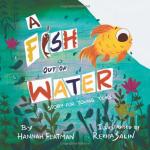
My story for young TCKs and MKs in transition, A Fish out of Water, is a good conversation starter for parents who want to guide their little ones through cross-cultural moves and culture shock.

Rice and Beans and the TCK Hybrid Identity

Rice and beans: the perfect combination! Where we live in NE Brazil, beans are often served first, with rice on top. That seemed strange to our family at first, coming from the UK where most people put their rice on the base and ladle the beans on top. One of my TCKs currently likes rice first with beans on top; she was born in the UK. My other TCK prefers beans topped with rice; he has a Brazilian passport. Although essentially it is the same meal, it does change your experience depending on whether you place the rice or beans on the base, top, or side by side. 

This versatile meal got me thinking about the hybrid cultural identity of our TCKs. Which cultural influences are central to their identity? Which are secondary (or tertiary) at the moment? At what stages in cross-cultural transition do TCKs begin to identify more with their host culture than their passport culture? 

In some ways the terms “host culture” and “passport culture” limit the multidimensionality of influences and experiences making up a globally mobile lifestyle. They don’t allow for multiple passports or multiple simultaneous hosts, and they assume that any one culture is self-contained and not already a melting pot of cultural influences. Alternatives such as “root culture” or “heritage culture” are less widely used, however, so for the purposes of this conversation, I’ll refer to the more commonly used “host culture” and “passport culture.”

All TCKs have a hybrid identity, but individual TCKs may emphasise different aspects of their cross-cultural identity. They may be rice-first or beans-first depending on the places they’ve lived, how long they lived in those places, and their age in each of those places. Their experience of the world is quite different from their monocultural peers, who may think in terms of rice-only or beans-only.

Our family has a third combination of ingredients on our plate. My husband had a long-term ministry and calling to South Sudan before we met, and I to Brazil. From our current ministry base in Brazil, we usually make an annual visit to South Sudan. We are discovering this was one thing as a couple, but another as a family with young kids. 

When we got married, we wanted to remain true to our commitments to two countries on different continents. We chose to see opportunities rather than competing demands. With children, however, our time and resources are more pressured than they were as a couple. For this season as a family with two little ones, Brazil is our home, and South Sudan is the place we keep returning to.

When a South Sudanese friend spent a month with us last year, our children’s links to South Sudan came alive to them. They discovered that South Sudan is also “their place” (both have Dinka middle names). They now have another combination of ingredients, another colour to add to their kaleidoscope identity. 

Having a wider pool of significant cultural influences than the traditional model of passport and host cultures is very common for TCKs. As we introduce our little ones to a fourth (or sometimes fifth) culture, we notice increasingly how different members of the family have different cultural identities. My husband and I came to South Sudan as adults; our children are having a significant experience of South Sudanese culture in their formative years through lived experience and ongoing relationships there. 

Though children may have more cultural influences than passport and host cultures, we still use the term third culture kid to describe their experience. It is the experience of living cross-culturally, outside of their passport country, which is the Third Culture, not the number of cultures in the mix.

At different stages in their lives, and particularly during times of transition, TCKs’ palates change. The experience of cross-cultural living and engagement in those formative years shapes who they are. Our rice-first child was once decidedly beans-first, until we spent a year in the UK during the pandemic. We intentionally provided opportunities for her to engage with our serving country’s culture despite the distance, as well as to maintain her Portuguese and friendships whilst away. During that year our beans-first boy learnt to sleep under a blanket, and to eat rice without beans (literally and metaphorically). 

Lauren Wells reminds us of the chameleon-like ‘ever-adapting identity’ of TCKs and gives some ideas about how to anchor their identity.1 During those early years identity is constantly being constructed and moulded. What can parents and TCK care-givers intentionally do to anchor our TCK’s identities? This is an important question for both host(s) and passport cultures. Are we having an ongoing conversation with our TCKs about which aspects of their cross-cultural identity are important for them to maintain, for themselves or for the family, and why? How do we give them the tools to evaluate which aspects of the culture are good (and which aren’t), which are significant, and which will help shape them into Christ-likeness? Whilst there are some cultural practices of the host culture they need to adopt whilst living there, there are choices about which other ingredients they add to the plate which can be made together with their care-givers and family.

As a family we’ve added even more questions to the list. Each member of the family may adopt a different form of hybrid identity to the other. How do we cater to that? How can we support family members who struggle with an aspect of our host culture which we enjoy? Which particular family traditions or events are shaping our little ones? How can we intentionally create routines, traditions, and relationships which take the best from each culture? How can we help our TCKs to grow in Christ-likeness? 

I often think about how our saviour was shaped by cross-cultural experiences, including being sent to live as a TCK on earth and his time as a young child in Egypt. His siblings and parents did not share in all these experiences. I wonder how Mary and Joseph navigated that. I wonder how I, as a parent, can navigate my children’s different experiences of the world.

TCKs are known for being sociable and quick to make friends. My two connect most readily with other rice and beans kids, or really any child who has lived a cross-cultural experience, whether that’s rice and beans, or yam and chicken, or ramen and kimchi. Sometimes their monocultural (just rice, or just beans) friends don’t get them fully. 

Even if they might not completely understand, we appreciate when anyone takes the time to listen to our little ones and engage with their rice and beans identities and hear their beans and rice stories.

One of the rice and beans stories we tell in our home is A Fish out of Water. I first told this story to my little ones before a cross-cultural transition back to our passport country, the ‘home’ they couldn’t remember. It is the story of a little fish struggling with a cross-cultural transition, until a new friend with similar experiences reminds her about her home with the Creator. Conversation questions at the end help families to open up discussions with their TCKs about culture shock, loss, and how to support each other through a cross-cultural move.

I hope A Fish out of Water will give MK and TCK caregivers ideas about how to intentionally walk through a transition (before, during, and after) with their little ones. Let’s embrace every combination of rice, beans, and foods which make up the hybrid identity of our TCKs!

(You can find A Fish out of Water on several Amazon marketplaces globally. It is also available in Brazilian Portuguese through Betel Publicações.)


1. Wells, Lauren. Raising Up a Generation of Healthy Third Culture Kids: A Practical Guide to Preventive Care. Kindle Edition. p. 1984.