You Were Never Meant to Break Alone

Content warning: This article contains descriptions of a tragic death.

If you’ve ever suffered alone, you know how unbearable it is. Suffering is bad. Alone-ness is worse. This is what Lent is showing me—that this liturgical practice of communal reflection, grief, and hope is a formative Christian discipline about togetherness. It’s teaching us how to hold together in the weight of human brokenness. It’s teaching us not to protect ourselves from grief or rush past it, but to sit with it, be changed by it, and move forward together in it.

I don’t want to be spared from sadness. I want to learn what to do with it, how to be changed by it, and how to live fully with others in the midst of it. I was eight years old when I first learned this.

“Something is wrong with Richard.” The name of my best friend in Cameroon fell heavy as my neighbor delivered grim news—the kind that is worse at night. Richard’s flu had taken a turn for the worse when his family sought a traditional healer, whose methods of cutting out the swollen uvula spiraled into disaster.

My dad, having the only vehicle in our village at the time, loaded the young teen into our family car/community ambulance and began the starry-night journey across wretched clay roads to a mission hospital two hours away. 

As the sun broke through the night the next morning, I woke to wailing. My dad drove up our driveway and delivered my friend’s body to his horrified mother. I later found out that my father had to watch as Richard’s eyes grew wider and his lungs filled with his own blood, mission doctors and nurses desperately trying to provide relief that never came.  

I remember falling silent and shaking on my front steps, overwhelmed by the sight of my village mamas who came running, screaming, tearing their clothes, fainting. The air filled full and loud, their wailing alerting the rest of the village that we’d lost our own. These women made grief a force that was fierce, collective, and fully alive. I was overcome. But I was not alone. 

Then the rituals began. They are customs too sacred and culturally protected to write for the world to see, but they are ones that honor the pain of the living while honoring the life of the dead. Ones where the body of a child is passed around, and the women who once nurtured life into this being now metaphorically drink of the death that the body experienced. That day my village mamas gathered around a broken body and remembered—together. 

This felt viscerally like communion. 

Was I afraid? Yes. Did I crawl into my parent’s room the following nights scared that my own lungs might choke the life out of me in my sleep? Yes. Was the sight of my friend’s body being passed around in sacred ritual overwhelming? Yes. 

But I didn’t need saving from the sadness. I needed to be taught what to do with it. I needed to see with my own two eyes that crying your lungs out with your neighbors is exactly what you do when life is lost. I needed to learn that shared shrieks of crushed hearts mean you’re not alone. I needed to see that falling to the ground and losing consciousness from grief is what mothers do when they put to rest the bodies that sprouted inside them—and that they have people who will do it with them. 

We were breaking. But we were breaking together.

My Cameroonian mamas taught me to acknowledge sadness for the violence that it is on the soul instead of pretending it doesn’t exist. They taught me to hold the paradox that grief feels so constricting because life was first good, because we first loved, and now we have lost. My parents taught me that crawling into their room for comfort instead of panicking alone is exactly what I should do when I’m afraid.

Years later, I went to my first Western funeral. The stoic suits and stifled tears felt almost hollow. The room felt uncomfortably polite, and this form of grieving seemed to tell only a partial story as everyone sat perfectly spaced in their individual chairs. That is, until I saw my normally put-together friend drag herself to her son’s casket and lay herself fully across it, refusing to rush mourning for the sake of the ceremony. And the whole room broke. 

It was then that I knew grief is universal. No matter the ritual, we need togetherness when anguish hits.

No one is truly protected from the shattering moments of life. But straddling worlds may mean there’s a little less insulation between you and death, poverty, war, injustice, bad medicine, and crime. Becoming one with our neighbors and bearing their burdens as our own makes these truths worthy of our attention, our energy, our love, and our sadness. And this sadness isn’t valueless. 

As we sit together around the world in the reflection of Lent, may we heave a collective Christian sigh. One where we commune to honor the hanging of Heaven’s Child while also hungrily accepting His atonement. One where we refuse to rush through the observance so we can start life’s ceremonies. One where we are not protected from brokenness but are changed by it. And one where we break—but never alone.

Photo by Marianna Smiley on Unsplash

Introducing a New Middle Grade Fiction Novel for TCKs

Sam’s Roommate Disaster released today on Amazon as the newest TCK book on the market. 

Have you ever read a story and felt like you were reading your life? Growing up as a kid in Cameroon, I never had that experience – even though I poured over the books in our extensive homeschool library. My new book, Sam’s Roommate Disaster, is my attempt to change that for young TCKs. 

TCKs can get exhausted from frequent change and loss. While there’s a lot of loss in the globally mobile experience, there is also precious gain, and that is the beauty of the TCK experience. I want third culture kids to have relatable stories where, even in the pain of unexpected change, they see that it is worth leaning into new experiences and new people to see what is on the other side.

I wrote this book for the kids whose backgrounds are underrepresented in children’s literature. I wrote it for the kid who doesn’t like school and who struggles with reading. I wrote it for the one who daydreams during class, the one who wants to be outside exploring. I wrote it for the kid who does something without thinking and then wonders, “Why in the world did I just do that?” 

I wrote it for the kid whose friend moved away and they’re pretty they’ll never make a friend like that again. I wrote it for the kid who is misunderstood and doesn’t want anyone to know why. 

I wrote it for third culture kids who live behind cement walls, the ones sitting in metros, and the ones running barefoot through jungles. I wrote it for their monocultural cousins who need a sneak peek at childhood overseas. I wrote it for the kid who needs an imaginative escape into a world of friends and adventures. 

I wrote it for the moms who have to send their kids to boarding school. I wrote it for the dorm staff who became like second parents for TCKs during formative years. I wrote it for international school teachers who want a fresh book with settings that don’t have white picket fences and characters who make all the right choices. But mostly, I wrote it for your kid.  

I wrote Sam’s Roommate Disaster right in the thick of an incredibly difficult season in my own journey as a global worker. It was a time when I needed to come up for air. And that meant revisiting the awe and wonder of childhood stories, both mine and my husband’s. It meant sharing stories with my kids around the dinner table. 

It meant listening to the giggles of old friends as they told stories from their perspective. It meant opening doors to hear fresh adventures from my in-laws about their wild child, Sam, who did all the things, took all the risks, made some mistakes, and picked himself back up again. And it meant fanning a spark of creative writing which soon became a flame that brought me great joy. 

Disappearing into these stories transported me back to steamy jungle rains, clunky old bikes with tales that could fill libraries of books, tight sibling bonds, and small schools where your youth group leader is also your math teacher. It took me back to the feeling of dread after doing something dumb and realizing you made a mistake. It awakened the feeling of hot tears on freckled cheeks, the rush of wind through hair on a runaway horse, that first crush. It made me remember small class sizes where even the tattletale belonged and the unforgettable innocence of childhood BFFs.  

As your kids read this book, I hope it solidifies their belief that the world of third cultures is one in which they belong. This is their tribe and TCKs are their people, whether they’re in Thailand, Hungary, or Uganda.

If you grew up overseas and you read this to your kids, I hope it transports you back to a time of jungle rains, small schools, and BFFs. Mostly, I hope it unlocks your ability to share your own story with your kids, because that’s what they really need to hear. 

Book Teaser:

“Sam’s heart pounded like a hot basketball in his ears. If he heard one more snore from his roommate, his anger might just spill out, and there was nothing more embarrassing than crying in fifth grade. Scrunching the covers tighter around his head didn’t do anything to muffle the noise rumbling from the bottom bunk. Being eleven at boarding school was hard enough, let alone sharing a room with Jordan, the only kid at boarding school who snored like a freight train.”

Buckle up for adventures in the jungles of Congo with boarding school kid, Sam! Hold on tight, because 5th grade for Sam includes a run-in with a highly venomous green mamba, a runaway horse, a heart-pounding close call on his dirt bike, and an angry mama pig. His biggest challenge, however, has nothing to do with snakes or pigs. Sam’s greatest challenge is his new roommate, Jordan.

Jordan is making 5th grade impossible. He’s loud and messy, and he ignores Sam. When Sam realizes there may be more to the story, will he decide to keep his distance or give his roommate a chance?

What kids are saying:

“I like the suspense, the love, and disliking feelings.” –Sam, age 11 (Indonesia)

“Readers beware: full of motorcycle chases, green mambas, flying lizards, and the

dreaded banana bread.” – Michael, 8th grade  (Cameroon)

“I really loved how the descriptions made me feel like I was with them throughout their adventures! After reading this book I would really like to learn how to ride a dirt bike!” – Eliana, age 11 (El Salvador)

“It was really fun and exciting, and it was encouraging at the perfect time when I needed it.” – Charlie, age 9 (Hungary and Mongolia)

“This book was really great! I could really relate to my own life as a missionary kid and all the adventures I’ve had!” – Kora, age 10 (Colombia)

“It was cool to see what missionary life is like in other countries. Just watch out for banana bread and lizards with parachutes!” – Andrew, age 12 (Indonesia)

“I liked this book because there are a lot of different adventures, and it’s based on real life. It’s an exciting book, and there’s never a dull moment!” – Asher, age 9 (South Africa)

Fun Facts to share with your kids AFTER they’ve read the book:

Yes, the stories are based on true events from either Sam’s childhood or mine. 

Yes, I’m one of the characters. 

No, I didn’t meet Sam until high school. 

Yes, Sam hates bananas that much. 

Yes, soccer really was that big of a big deal. Jordan went on to co-found Petrichor Football Association. 

Yes, Josh and his red-headed crush ended up together. They live on a happy little farm in Indiana. 

Yes, the lizards were fine.

No, I’m not done writing kids’ books. I’m working on Book 2 of the Barefoot Around the World series.

Where to find it:

Head to Amazon now and grab your copy of Sam’s Roommate Disaster! Dive into exciting new tales that resonate with TCKs around the world. For a limited time, enjoy special discounts on b ebooks ($3.99) and paperbacks ($8.99) through August 23rd. Let’s revive storytime and make it an adventure your kids will love!


Follow Raising a Family Overseas on Instagram and Facebook for practical tips and conversations about doing global family life.

What 7,300 Moons in Africa Taught Me

An outline of banana leaves framed the inky, glittering expanse that August night so long ago. My father raised his face to the moon and asked his father in heaven, “Lord, how many more moons will I witness in the African sky?” It was this farmer’s first night in Cameroon at the beginning of a Bible translation assignment that would span the next several decades of his life. With his homeland behind him, hundreds of moons would cross the Cameroonian sky before he would see an Iowa moon again. I was seven.

I have now witnessed over 7,300 moons in the African skies between my childhood and my adult life. Here are the stories I wish I could go back and tell that farmer the night he stared at the hollow moon and considered the cup he bore. 

“Dad, a few weeks from now, under this very moon, my brother will fall deathly ill from malaria, his feverish body folded in a wool blanket. Your desperate prayers will be driven by the crushing story of the two young sons your friends lost to malaria earlier this year. My brother will look small and skinny, and you’ll be scared. Take courage. God will heal your son, and Mom will nurse him back to health. God’s grace is sufficient for you.

“Under this tropical moon, Dad, my imagination will spring to life chasing tales and adventures across hundreds of pages in hundreds of books with the help of a kerosene lantern and a healthy diet of Vivaldi playing in the background. God’s grace is sufficient for you.

“The moon will be weak the night you lay your exhausted head down after pulling lifeless men, women with bodies broken open, and babies with legs twisted backwards out of a horrific taxi accident down the street. Brace yourself. It won’t be the last time you do this. God’s grace is sufficient for you.

“The light of this moon will peacefully fall on the volcanic mountain ranges around our home each night, and your children will close their eyes to the sound of your and Mom’s voices filling our cement hallway with humble prayers uttered from your room, over each child, each family member, each Cameroonian family member. God’s grace is sufficient for you.

“This moon will faithfully mirror the sun night after night from the first word you learn in Nooni till the day you write your first speech in the previously unwritten language. God’s grace is sufficient for you.

“By the haze of this equatorial moon, I will memorize the deeply furrowed lines in the faces of my Cameroonian mamas as they rotate roasting ears of corn by the fire of their mud brick kitchens for their white child. God’s grace is sufficient for you.

“The moon will light up the sky every Friday night when Mom lovingly folds pizza dough on her rickety kitchen table and us kids pick out our favorite movie. You’ll whistle your way out under the stars to fire up the generator for our weekly huddle of six around a 9-inch screen. God’s grace is sufficient for you.

“The moon will shine a little brighter in your world as you sit in your prayer chair and ponder the gift of Mom. You’ll burst with pride watching her skillfully raise a family in a foreign land, make excellent food from scratch, trek mountaintops in a skirt and boots, navigate impossibly rutted roads like a pro, and work with a people you’ll come to love to write the rules to a language that’s never been written. She’s pretty great, Dad. I’ll learn what a woman can do by watching her. God’s grace is sufficient for you.

“A sliver of this moon will dampen sad and heavy the night that our family experiences a Big T trauma that will forever shake our lives. Dad, the sun will come up the next day, but there will be a lot of hard moons after that. God’s grace is sufficient for you.

“The rays of this moon will pierce through a burglar-barred window the night that I will find freedom and love in Jesus Christ as a 16-year-old under your roof. God’s grace is sufficient for you.

“By the glow of this moon, a boy I met in geometry class will take me hippo-watching along the banks of a muddy river in the Central African Republic. Did you know that hippos grunt so loudly you can hear them a mile downstream? It will be amazing, Dad. You’re really going to like this boy. God’s grace is sufficient for you.

“Dad, a few years later, our trusty moon will cast light on a red clay path for that boy from geometry class as he steadies his shaky legs and musters up the courage to knock on your door. He’s going to ask you if he can love me forever. You’ll be glad you said yes. God’s grace is sufficient for you.

“This orb will pierce the sky with light and a never-ending message of hope through our family’s most tear-stained bitter nightmares and our sweetest toasted-marshmallow dreams. God’s grace is sufficient for you.

“This moon will dance like glitter the night the last verse of scripture is translated into the Nooni language, breaking open access for people to read God’s word in their heart language for the first time. They’re the same people who, four decades earlier, wrote a fervent plea in the language of colonizers for their mother tongue to be developed in written form. God’s grace is sufficient for you.

“Thousands of moons later, I will also look up at the unchanged luminous sphere, but this time it will be framed by the outline of macadamia trees on a farm in KwaZulu Natal. I will have just sung my own babies to sleep and herded my Irish Wolfhound to her blankie. I’ll think of you and Mom, and I’ll start my own mooncount on foreign soil as an adult. Oh, and Dad, the boy from geometry class is the best thing that ever happened to me. God’s grace is sufficient for me.

“Dad, whether it’s your first moon under the unpolluted Cameroonian sky or your eight hundred and thirty-first moon choked out by harmattan winds, you will find that God’s grace is sufficient for you. 7,300 African moons later, I came back to tell you that the moon at this angle is beautiful. It’s going to be an integral part of our family faith story. I’ve wrestled with the same moon, and I’ve found the same thing. God’s grace is not only sufficient, but lavish, for me.”

What Does It Mean To Be A Missionary Kid? 

by Iona McHaney Marcellino

I grew up in Angola, where my parents served as missionaries from 1999 to 2011. People often ask me what it was like to be a missionary kid. I never have a succinct answer.

It would be easier to share a memory, a well-rounded vignette of life in Angola, life on the mission field, that would allow the listener to see how nuanced their question is. It would be easier to sit the questioner down, hand them a cup of tea, and say:

‘I have a memory from Angola…..’

We were standing off the road in a remote area, at the Cascades de Kalandula (Calandula Falls). The absolute beauty of the sight was magnified by its seclusion. I had already been to Victoria Falls, and it was fine, but it wasn’t a memory I’d want to write about. 

As for why I had the opportunity to see these beautiful waterfalls? That’s a more complicated story.

My dad had fallen ill on a mission trip to the interior of the country. I don’t remember what he had. Malaria? Cholera? Marburg? Something obscure and foreign to Western ears, something easily preventable or easily treatable when you’re surrounded by modern facilities and deadly when you’re not. 

I think I was nine. Or ten. I may have been twelve. I don’t remember a lot of the wider details, but I do remember the drive there. 

We drove over 10 hours on dirt roads, bumping along, first in the coastal heat, then in the interior mugginess, and then finding a little relief as we hit the freshness of elevation. We crossed a river on a bridge made of tree logs wedged in between the banks. If I had ever doubted my mum had faith, I didn’t after she drove over that bridge. 

Then we heard that my dad had died. He was so ill that the people he was visiting didn’t believe he could recover. It just didn’t happen in their experience. When he was moved to a bigger city, the rural church announced on their radio that the American Missionary had died. There was a prayer vigil for his family and gratitude for his life. Meanwhile my dad was paying $100 a night to sleep on a foam mattress in a dismal hotel.

I don’t know if I heard about it before we left Luanda, while we were on the road, or after we had my dad back in the car. My memory is not really about my dad being ill and announced possibly dead on Angolan radio.

My memory is of the waterfall. 

The water roared and tumbled over the cliff, rainbows flitting off the spray. The sound was purely ecstatic as millions and millions of water molecules clambered over and around each other, then landed on rocks and plunged deep into a pool obscured by the rising mist. 

We stared and stared at this magnificent, jubilant display of Creation. What a treasure. 

No tourists were flocking with their cameras to get a better view of water they didn’t know and a land they didn’t care about. No one was posing in front of the rainbows for a thousand clicks and then off to their next excursion. No one was traipsing through rained out roads and minefields to see this tremendous display of glory. 

No one, except for us. 

And we were only there because we had to collect an American missionary who had almost died in a rural village. 

I remember staring at the shrouds of mist as they rose back up over the cliffside, the water giving an encore, another wave before wafting off to its next journey. I pulled a woven wrap from Chad around me and shivered, no doubt pretending I was some distant relative of Lucy Pevensie and that this was my Cair Paravel. And in a way, it was. 

I remember turning to eat lunch with my mum. I remember watching my dad, who’d lost about 15 pounds in two weeks, eat his lunch and speak to the team leader (who had travelled with us) in English, then turn to speak to his friend in Portuguese. 

When people ask me, ‘What was it like being a missionary kid? What was it like living in Angola?’ I wish I could somehow transport them into this scene and share with them everything I was seeing and feeling all at once: the juxtaposition of a recovering man, loyal friends, near tragedy, and the absolute, unashamed wonder of Creation at our feet.

I wish I could share that memory and hear people say, ‘Ah, yes, I understand, what a difficult balance to live in.’ 

It’s really difficult to explain that challenging balance, of recognising the good and the terrible all at once, unless you’ve experienced it first hand. 

Being a missionary kid in Angola was living in the constant state of seeing the worst and seeing the best. Watching war ravage a nation and a people, then watching that war end and witnessing peace weave back into a land. Standing by as epidemics hit all around, and also seeing the flood of help that comes from churches when others are in need. Feeling fear at night and being grateful in the morning. Being different and still loved. Being a foreign misfit and still welcomed. Driving all day on roads that would fail any British inspection dismally to reach a father who may or may not be alive, find him recovering, then standing in front of the most beautiful natural wonder I have ever seen and probably ever will see, and giving thanks to God for undeserved provision. 

There are many different responses when I explain my life on the mission field. Many people exclaim how adventurous it must have been – and it was. But the majority of people have more negative, and maybe more naive, things to say about my lived experiences. 

Those are the people I most wish I could somehow share this story with – a strand of my memory demonstrating the reality of living between the good and the bad, between the eternal world and this broken one, between the plagues and the cascades of mercy.

Missionary kids, on any field, live in that space. Some missionary kids spend their childhoods in the back of a four-wheel drive watching the Jesus film over and over. They watch as the Holy Spirit captivates and moves, they watch on Sunday mornings as people grieve, weep, and share about their lost family members, their dying children, their lost homes, their broken land.

Other missionary kids live in a completely different context, some in thriving metropolitan neighborhoods, others in stable, quiet towns, but they continue to watch their parents serve a community, take on its burdens, and give their time and resources to a cause beyond this world. MKs often have a front row seat at the visceral fight for life; there on the mission field we see that precious glimpse of eternity over and over again. 

Some people say I must be relieved to be in the US or the UK and grateful to have left Angola, my home. Others tell me how unbelievable my parents’ sacrifice was. Some press to learn more, asking endless questions. Was I scared? Angry? What terrible things did I see? How is this life justified? Others, I know, are not really interested in hearing anything about a life so far beyond their own context or understanding.

No matter what you think of my experiences, however, my prayer is always that someday you get to see those same waterfalls. I hope that someday you are able to see an immense display of cascading mercy and joy amongst a seemingly impossible trial. I hope you too will be able to get a glimpse into Eternity as you stand on the edges of this world. 

***

The missionary life comes with a lot of sacrifice. It comes with losing time with family, losing time at home, in growing up too fast and in not knowing enough about your own passport country. It comes with extreme loneliness and even greater joy.

Missionary families need support tailored to their experiences, and those experiences are not always easy to understand. I will link to several resources for churches, families, and sending organisations who want to support and care for their mission families at the end of this article.

As an adult who grew up on the mission field, it has taken time to learn how to interact with my past with grace, compassion, and honesty. Living in a country that was not mine and living on the edge of a community as it grieved and grew was not always easy. It has taken years for me to be able to take hold of my story, with its misplaced grief, its perpetual homesickness, and its ill-fitting stories. There is a lot to unpack as an Adult MK.

Thankfully, you do not have to unpack it alone. There are some really valuable resources for adults who are looking back on their missionary kid experiences and trying to make sense of it all. I’ll list them at the end of this article, and I really encourage you to pursue them.

Your memories, your stories, your experiences are worthwhile. They are invaluable pieces of who you are, and navigating your story with grace, honesty, and understanding can be challenging but also restorative. There are unexpected travel plans, unknown illnesses, family stresses, hidden losses, and some grief sidelining most of our stories. But there are also beautiful surprises, like hidden waterfalls, that make remembering the journey a little sweeter. 


Resources

For Adult MKs: 
Misunderstood by Tanya Crossman 
Unstacking Your Grief Tower by Lauren Wells 
Unstacking Sessions with TCK Training  

For parents of MKs: 
Our Children, Our First Ministry: Discipling Missionary Kids
How Parents Can Help 

For sending churches, grandparents, and others at home: 
Churches supporting missionary families
Mobility is tough on kids: here’s how you can help
10 Questions Missionary Kids would love to be asked
10 Questions MKs Dread 
Caring for TCKs when you’re not the parents 

For sending organisations:
TCK Training for Overseeing Agencies


Photo by Jared Erondu on Unsplash

~~~~~~~~~~~

Born in Scotland to American parents and raised in Angola, Iona McHaney Marcellino is a second generation Adult TCK, a nurse, and a writer. She currently lives in Cambridge, UK, with her husband and daughter. She enjoys working alongside others who are committed to supporting TCKs with research-focused TCK Care, and she interned with TCK Training from January to July 2023. Iona writes about her own experience as a TCK in her blog, authentic unrest. She enjoys connecting with other Adult TCKs, virtually or in-person, and discussing the nuances of the multicultural life.
To Love Two Places

Heidi and her husband are overseas newbies. They moved to Kenya in October, 2012, to capture the stories and images of the people and work across Africa. Her story of loss and gains is a poignantly beautiful look at the early days. Some Life Overseas readers are looking forward to those days, some are looking back on them, and some are smack in the middle of them.

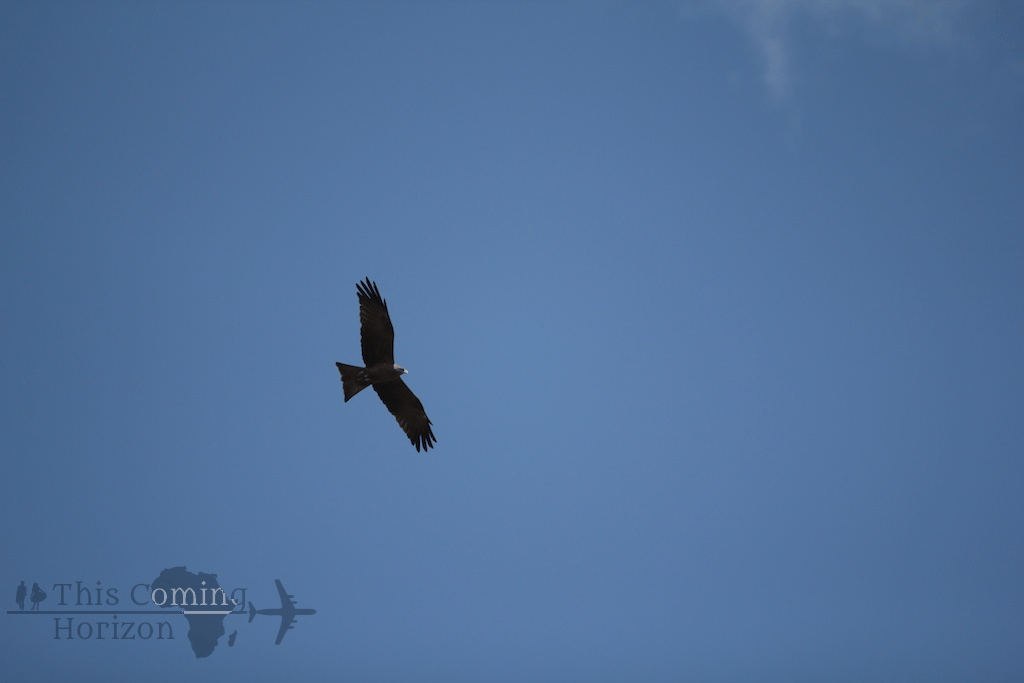
EagleFlyingIt’s been nine months now since the airplane’s wheels lifted off of our beloved Minnesota soil and I felt arrows of sorrow shoot through my chest. My heart was already heavy, burdened with the faces of goodbye, and I struggled to swallow as the mighty Mississippi River shrank into a ribbon and then disappeared behind a cloud.

And that was just the beginning of the heart pains.

Eight months ago, I took off my wedding ring and hid it away, because I didn’t want the streets of Nairobi to steal it from me. But my finger’s nakedness is still stark and shrill.

For three months, we rode matatus, those reckless, necessary public transit vans that added color and anxiety to our days. But despite the sunburns, blisters, and tears, we grew. We learned how to walk the streets like everybody else, we started to recognize the people we passed each morning, and we gained camaraderie with our fellow vehicle-less man. We started to belong.

Itasca, the headwaters of the mighty Mississippi in northern Minnesota.

Now that we found a car and have settled into a sensible routine, the pain comes in a different way. The kite bird that caws like a seagull reminds me of our favorite vacation spot on the shore of Lake Superior. The still, warm evenings fill me with the longing to have a bonfire in a backyard covered with crackly leaves. And the road that circles our neighborhood ­­­­and serves as our nightly walking path makes me wish that the football field in the middle was a lake teeming with goslings and that my best friend was chatting beside me.

This homesickness sneaks up on me, startles me. And leaves me wondering why. Why now? We spent two years of our married life looking forward to our move to Kenya, and now that we’re here, we can’t stop gazing backwards.

It’s a fine art, I’m realizing, to live in the present moment, to take each heart pain as it comes and pray that it won’t last long. Or that it will bring us one step closer to calling this new, lakeless city home.

This afternoon, as we sit on our doorstep beneath our avocado tree with our Kenyan mutt nuzzling us for more attention, I feel my heart beginning to open, to sense that I am splitting in half. It comforts me and it scares me, because to love two places will be dangerous.

But it will also be beautiful.

How do you handle a split heart? What are the things you miss the most about your home country? What will you miss about your host country?

Me (1)

       Heidi Thulin, missionary writer in Nairobi, Kenya

blog: Thulins in Africa  ministry: On-Field Media