A Summer Back “Home”

written by a Third Culture Kid

It was summertime when I realized that home was no longer home. The town where I grew up was quite small – it only took about ten minutes to drive between the two hills that bordered the town.

The buildings in the middle were old-fashioned. Everything seemed old now. The parks I walked through, the school where I learned cursive and addition, all of them were nostalgic for me, but normal for everyone else. The green fields I once drove by everyday felt new again.

I had taken these places for granted, not yet knowing how easily things can go from common to sparse. I remembered the buildings, but they didn’t seem to remember me. How long would it take for the people to forget me too?

My brother was lucky, in a way. He was too little when we left and remembered nothing about the little town where we grew up. Meanwhile I, eight years old and still taller than him, had left with broken, random memories.

Grandparents would often ask, “Do you remember this?” pointing at the buildings as we passed them. I always nodded, not wanting to disappoint them with the fact that I had yet to remember what we did there or what mattered about them. I did not want to disappoint them with the fact that the only building I wanted to go to was my house. Not here, back in Thailand.

“Do you remember your friend —-?” I would nod once more, not bothering to remind them of the fact that I had left those friends behind, made new ones, and not talked to them since. I remembered my home, but I also didn’t. 

The culture shock was not expected. After all, I had grown up there. The paved, clean roads, the rooms filled with English, the sea of white wherever we walked. The talkative strangers, who acted as if everyone they met had been their friend for years.

It was all different. It was new, but not new. The habits I had picked up in Thailand carried through. I was nine years old, reminding myself I didn’t have to bow, didn’t have to take off my shoes outside. One day I would learn to become a whole different person, the habits just barely slipping through a facade.

In Canada, I became “the girl who is from Thailand.” In Thailand, I became “the girl who is from Canada.” I could never be fully either. I was stuck between two cultures, two worlds, at only ten years old. I was home, but I also wasn’t.

A pandemic passed, and suddenly I was a teenager. I was thirteen, relatives back “home” telling me how much they missed me and wanted me to come back, already starting to assume I’d come back “home” for university.

“You could always stay here with me while your family is in Thailand,” my aunt would say. I didn’t want to disappoint them with the fact that I didn’t miss Canada. I didn’t want to travel the long distance, didn’t want to go there after university, didn’t want to leave my home. 

Canada felt cold in more ways than one. Thailand was my home. The fruit was sweeter, the weather was warmer, and I felt at home. I enjoyed showing it to them, but it always ended up being us who made the trip. I was fourteen, putting on a face, learning the ways of pretending I loved Canada. I was fourteen, acting as I was expected to be: the oldest granddaughter. The Canadian-but-Thai girl. The eight-year-old girl I left behind, yet my family still knew me as. I knew my role. My mother taught me well. 

I was Canadian. I was Thai. I was international. I was eight, nine, ten, eleven, twelve, thirteen, and fourteen. I was so many things at once. I was acting. I was overwhelmed. Who am I? Who do they want me to be? Which path am I supposed to follow? What do I do? Who do I want to be? I didn’t know. I would never know, and I’d be stuck acting as different people for different groups forever and I can’t do it anymore and–-

Then, all of the sudden, I’m fifteen. I’m fifteen, and I realize the truth. It didn’t matter where I was from. What I was was a child of God. I wasn’t part of Canada, or Thailand, but part of the kingdom of the King. The only opinion that mattered was His. He accepted me for who I was, whether I was Canadian or Thai or anything else. He gave me peace. I still feel as though my relatives won’t see my whole, true self. But now I know who I am, and my inner child can rest.

The Future and Beyond! Preparing TCKs for College

by Kristi Steele

For most high schoolers, the “college” conversation doesn’t really begin until junior year or later. The situation isn’t that straightforward for families living outside their passport country. But matter where you live, there are great ways to prepare and maximize your conversations about the “after high school” options.

This matters deeply to me after growing up overseas as an MK with limited funds and maybe one college visit. My schooling was as varied as the many houses we lived in. I scoured scholarship applications, went to college, graduated, and worked in an international fair-trade business until I was hired as a college recruiter for international students and TCKs. In the almost five years I recruited students, I observed two things:

  1. Students who live outside the US are interested in what is next after high school, but they have limited opportunities to connect with resources, options, and experts. Understanding the collegiate search and admission process is hard no matter where you live, but it’s especially difficult when you live abroad.
  2. Opportunities to hear from universities and connect with them were few and far between.

After several years of students contacting me in the spring of their senior year, only to learn most of the scholarship money had been dispersed by then (and the conversation ending in tears), I stopped recruiting and started my own business (KC360.co). My goal and passion melded into one: helping and resourcing TCKs and international students to meet the needs I had observed. I believed we could improve the process for international families and perhaps mitigate a few of those tears.

But let me first say that college isn’t for everyone, and that is ok. We need everyone to walk the road they are uniquely created for because we want all of you in the places that bring you joy and connection. College is one avenue to those roads, but there are others too. So where you do begin?

For families of freshman and sophomores, the majority of your involvement in any college, gap year, trade school, or apprenticeship conversations should be just that: conversations. If you are near a university that is within your family, community, or support system, sign up for a college visit! It is great for students and families to visit a campus (not just drive through it), visit a class, eat in the cafeteria, and hear from admission professionals.

If you normally live abroad and are back in the US, take some time to give this experience to your student. (Feel free to visit universities abroad as well!) College visits are free and help students “feel” some of the nuances they may not know answers to – things like big campus or little campus, walkable or drivable, urban or smaller town, etc.

When families reach junior and senior year, there are some sizable shifts for students to prepare for college. We have an amazing task as parents to help prepare our students for adulthood by helping them slowly ease into this arena within the safety of our homes. Basic goals such as laundry, cooking a favorite meal or two, understanding a budget (how much money it takes for me to be my best self), are all important. Go a little farther if you can, and help them understand time management and goals.

These years are when conversations about college should turn into a bit of action: reflecting on whether college is for you, the types of majors and careers which may suit you, the financial picture of what it will look like for yourself and your family, and more.

Whether you are homeschooled, public schooled, private schooled, or a mixture of these, college search and admission can feel like a lot when you are overseas. Helping students navigate the process is what I have loved doing for almost a decade, and it is a joy.

Factoring in living abroad adds a new level of “interesting” to the plate. If you fall in this category, you and your student are not alone. Yes, there are complexities, but none which cannot be solved together with expert help. Not sure where to start? Here are some ideas:

  • Listen in to the free KC360 podcast for college search and admission insights in 15 minutes “bites” (you might hear a familiar voice!).
  • Unsure what to major in or where to even start in considering a college? Take a look at The College Project, a self-paced course for students to think through their options after high school, size of institutions, majors, careers, and build a college list and complete a college application strategy.
  • Overwhelmed by the finances of it all? The Scholarship Secrets course will help you understand the US financial aid system, uncover secrets to scholarships, and create a strategy to apply for them.
  • If access to universities is a frustration for you, join the free Virtual College Fair (September 30 – October 12, 2024) to hear from a variety of universities. Presentations are “on-demand” and can be watched in any time zone. The fair is open for two weeks to accommodate schedules, life, and so much more that enters into this season of our life! Register now here.
  • Access a free high school timeline for each grade and get helpful tips for your student and family.

My passion is for families to have resources which help them and make the college search and admission process less overwhelming. Being a global citizen has its challenges, and education is one of them. Know that you’re not alone and that there are resources to help you navigate even this road.

~~~~~~~~~~~~

As a TCK, a former college recruiter, and international education consultant, Kristi Steele created KC360 for international students and families just like you. KC360’s goal is to understand your family’s and student’s expectations for your college search and application journey. With a passionate commitment to TCKs and international students and experience in collegiate university recruiting, KC360 will assist and advise you throughout the college application process.

Introducing a New Middle Grade Fiction Novel for TCKs

Sam’s Roommate Disaster released today on Amazon as the newest TCK book on the market. 

Have you ever read a story and felt like you were reading your life? Growing up as a kid in Cameroon, I never had that experience – even though I poured over the books in our extensive homeschool library. My new book, Sam’s Roommate Disaster, is my attempt to change that for young TCKs. 

TCKs can get exhausted from frequent change and loss. While there’s a lot of loss in the globally mobile experience, there is also precious gain, and that is the beauty of the TCK experience. I want third culture kids to have relatable stories where, even in the pain of unexpected change, they see that it is worth leaning into new experiences and new people to see what is on the other side.

I wrote this book for the kids whose backgrounds are underrepresented in children’s literature. I wrote it for the kid who doesn’t like school and who struggles with reading. I wrote it for the one who daydreams during class, the one who wants to be outside exploring. I wrote it for the kid who does something without thinking and then wonders, “Why in the world did I just do that?” 

I wrote it for the kid whose friend moved away and they’re pretty they’ll never make a friend like that again. I wrote it for the kid who is misunderstood and doesn’t want anyone to know why. 

I wrote it for third culture kids who live behind cement walls, the ones sitting in metros, and the ones running barefoot through jungles. I wrote it for their monocultural cousins who need a sneak peek at childhood overseas. I wrote it for the kid who needs an imaginative escape into a world of friends and adventures. 

I wrote it for the moms who have to send their kids to boarding school. I wrote it for the dorm staff who became like second parents for TCKs during formative years. I wrote it for international school teachers who want a fresh book with settings that don’t have white picket fences and characters who make all the right choices. But mostly, I wrote it for your kid.  

I wrote Sam’s Roommate Disaster right in the thick of an incredibly difficult season in my own journey as a global worker. It was a time when I needed to come up for air. And that meant revisiting the awe and wonder of childhood stories, both mine and my husband’s. It meant sharing stories with my kids around the dinner table. 

It meant listening to the giggles of old friends as they told stories from their perspective. It meant opening doors to hear fresh adventures from my in-laws about their wild child, Sam, who did all the things, took all the risks, made some mistakes, and picked himself back up again. And it meant fanning a spark of creative writing which soon became a flame that brought me great joy. 

Disappearing into these stories transported me back to steamy jungle rains, clunky old bikes with tales that could fill libraries of books, tight sibling bonds, and small schools where your youth group leader is also your math teacher. It took me back to the feeling of dread after doing something dumb and realizing you made a mistake. It awakened the feeling of hot tears on freckled cheeks, the rush of wind through hair on a runaway horse, that first crush. It made me remember small class sizes where even the tattletale belonged and the unforgettable innocence of childhood BFFs.  

As your kids read this book, I hope it solidifies their belief that the world of third cultures is one in which they belong. This is their tribe and TCKs are their people, whether they’re in Thailand, Hungary, or Uganda.

If you grew up overseas and you read this to your kids, I hope it transports you back to a time of jungle rains, small schools, and BFFs. Mostly, I hope it unlocks your ability to share your own story with your kids, because that’s what they really need to hear. 

Book Teaser:

“Sam’s heart pounded like a hot basketball in his ears. If he heard one more snore from his roommate, his anger might just spill out, and there was nothing more embarrassing than crying in fifth grade. Scrunching the covers tighter around his head didn’t do anything to muffle the noise rumbling from the bottom bunk. Being eleven at boarding school was hard enough, let alone sharing a room with Jordan, the only kid at boarding school who snored like a freight train.”

Buckle up for adventures in the jungles of Congo with boarding school kid, Sam! Hold on tight, because 5th grade for Sam includes a run-in with a highly venomous green mamba, a runaway horse, a heart-pounding close call on his dirt bike, and an angry mama pig. His biggest challenge, however, has nothing to do with snakes or pigs. Sam’s greatest challenge is his new roommate, Jordan.

Jordan is making 5th grade impossible. He’s loud and messy, and he ignores Sam. When Sam realizes there may be more to the story, will he decide to keep his distance or give his roommate a chance?

What kids are saying:

“I like the suspense, the love, and disliking feelings.” –Sam, age 11 (Indonesia)

“Readers beware: full of motorcycle chases, green mambas, flying lizards, and the

dreaded banana bread.” – Michael, 8th grade  (Cameroon)

“I really loved how the descriptions made me feel like I was with them throughout their adventures! After reading this book I would really like to learn how to ride a dirt bike!” – Eliana, age 11 (El Salvador)

“It was really fun and exciting, and it was encouraging at the perfect time when I needed it.” – Charlie, age 9 (Hungary and Mongolia)

“This book was really great! I could really relate to my own life as a missionary kid and all the adventures I’ve had!” – Kora, age 10 (Colombia)

“It was cool to see what missionary life is like in other countries. Just watch out for banana bread and lizards with parachutes!” – Andrew, age 12 (Indonesia)

“I liked this book because there are a lot of different adventures, and it’s based on real life. It’s an exciting book, and there’s never a dull moment!” – Asher, age 9 (South Africa)

Fun Facts to share with your kids AFTER they’ve read the book:

Yes, the stories are based on true events from either Sam’s childhood or mine. 

Yes, I’m one of the characters. 

No, I didn’t meet Sam until high school. 

Yes, Sam hates bananas that much. 

Yes, soccer really was that big of a big deal. Jordan went on to co-found Petrichor Football Association. 

Yes, Josh and his red-headed crush ended up together. They live on a happy little farm in Indiana. 

Yes, the lizards were fine.

No, I’m not done writing kids’ books. I’m working on Book 2 of the Barefoot Around the World series.

Where to find it:

Head to Amazon now and grab your copy of Sam’s Roommate Disaster! Dive into exciting new tales that resonate with TCKs around the world. For a limited time, enjoy special discounts on b ebooks ($3.99) and paperbacks ($8.99) through August 23rd. Let’s revive storytime and make it an adventure your kids will love!


Follow Raising a Family Overseas on Instagram and Facebook for practical tips and conversations about doing global family life.

A Chat About TCKs, Faith, and Missions with Marilyn Gardner and Elizabeth Trotter

It was a joy to record this conversation with my dear friend and fellow expat writer, Marilyn Gardner. We talked about so many things that we had to split it into two parts!

In the first video, I introduce Marilyn, who wrote regularly at A Life Overseas for many years and has published two books on the TCK experience — Between Worlds and Worlds Apart. (She also raised her five children overseas.) We talk about writing, about her TCK childhood, and then begin talking about pitfalls in missions.

In the second video, we go deeper into some current and historical trends Marilyn has observed over the years, before pivoting to MKs and faith struggles. Marilyn knows what it is to struggle with faith, and her heart is so compassionate to those who are struggling.

I hope you will watch both videos when you have time!

Accessing the Power of Good Debriefing

A colleague of mine at TCK Training spent time preparing and travelling to facilitate a two-day debrief with a family who were on home assignment in their passport country. As they all introduced themselves and began to get to know each other, she asked what their hopes were for their time together over the next two days. The parents looked at each other and then back at her as they sheepishly admitted, “Actually, we have no idea. This is something our organisation requires, so we just signed up because we were supposed to. We have no clue what a debrief actually involves.” 

While debriefing has grown in popularity and more missionaries are at least familiar with the concept, the actual nuts and bolts of a debrief can be a bit murky. Because of that, it can be hard to even know, “What is a good debrief?” What should your expectation be of the debrief you signed up for? How do you know a debrief went “well”? 

As we’ve worked with hundreds of families at TCK Training, we’ve heard about a wide array of debrief experiences. There’s a vast mixture in what they received and how effective it was. We would love to see a broader understanding of the hallmarks of a good debrief, even if the execution differs.

In this article I am going to explore what a good debrief involves, why good debriefing can be so powerful, and how to access quality debriefing – no matter what services are (or are not) made available to you in your own situation.

Q: What is a good debrief?

1) A good debrief is preventive. 

That is, the debrief is not in response to a crisis situation but is part of a program of regular care. At TCK Training, we recommend that all families experiencing global mobility do a full debrief (two full days set aside for the sole purpose of debriefing the entire family) every 3-4 years and a check-in style “annual debrief” each year in between. While crisis situations also need to be addressed, this should not be the only situation in which a debrief occurs.

2) A good debrief crafts an intentional, open-ended journey.

Good debriefing is more than verbal processing, prompted with questions along the lines of “Tell me what happened? How did it go? What happened next?” A good debrief instead asks about all different facets of life, and is open to unexpected answers, not just looking to check items off a list. A good debrief asks intentional and purposeful questions that are crafted to lead you and your TCKs through a journey of discovery, finding things that need processing – even if you weren’t consciously aware of them.

For children, this element of a good debrief involves engaging in a variety of ways. Since we all know that sitting across from a child and asking them direct questions isn’t particularly effective, we need to make sure that movement and creativity are a central part of a TCK debrief. 

3) A good debrief creates a sacred space for hard things.

During a good debrief, you feel safe to explore difficult experiences and the difficult emotions that go with them. You are not shamed for your emotions, worried that your emotions might be used against you, or that what you share might result in you losing your job. In the sacred space of a good debrief, you know there are no “right” or “wrong” answers. 

4) A good debrief embraces both shared and individual experiences.

At TCK Training we believe in the power of families working through debrief materials together. We all have shared experiences as a family, and it is helpful and healing to process those shared experiences together. During the debrief, parents get the opportunity to model expressing hard feelings and doing the hard work of emotional processing, with expert guidance to support them. As their children watch this, it will help them recognize the importance of this work and how to do it, as well as give them permission to do this work with their parents, not only in the moment but in the future.

In addition, there will always be aspects of our lives as a family that are individual. Children and parents do not have the same experiences, nor does each child or each parent have the same experiences. Having individual sessions as well as family sessions is necessary to build self-awareness and for personal growth.

Q: Why is a good debrief powerful?

Making debriefs part of a regular program of preventive care leads to more beneficial outcomes. Reactive care – a debrief that takes place in the aftermath of a particularly stressful event – occurs when individuals are full of heightened and heavy emotions and aren’t able to fully engage in the debriefing process. During a preventive care-style debrief, individuals are less occupied with a specific need and can engage in the process of working through all the small things they have experienced over time. This leads to greater learning about themselves and their needs and greater likelihood of retaining that learning over time. 

As part of an individual debrief, teenagers and adults alike get the opportunity to work through their experiences with guided assistance. The crafted questions of a good debrief help us recognise things we didn’t even know were hiding under the surface of our hearts and minds. We debrief our emotions, identity, grief and loss, subconscious expectations, and more. 

Debriefing as a family helps us see where these different facts do and do not line up with each other – where we have different perspectives on the same events. Children are provided a safe space and a mediated opportunity to share emotions they have struggled to express. Parents can help fill in the gaps where children were missing part of the story. These can be powerful family moments.

One Adult TCK shared with me that as a child, their missionary family had something called a “debrief” every four years through their parents’ missionary agency while on home assignment. Yet this experience never included anything individual for them as a child or teenager, where they could explore their feelings. In addition, they felt constrained to not speak about certain events. A debrief that created sacred space and acknowledged their individual journey would have been far more powerful. It would have combatted the loneliness far too many TCKs struggle with and instilled the value that they are worth being individually cared for.

Q: How can our family access a quality debrief? 

If your organisation offers (or requires) a debrief, try to get some information about what debrief means to them. You might ask what the debrief consists of, how children are involved, what the goals/aims of the debrief are, and how the debriefers are trained. 

If your organisation does not provide debriefing, or the debriefing offered is not comprehensive, you could ask them to outsource these services to another organisation or to cover the cost of your family procuring a debrief elsewhere. Knowing what a good debrief is and why it matters will help in explaining why this is important to you.

Our priority at TCK Training is ensuring that families have access to quality debriefing, both inside and outside the missionary world, and we are not the only group with this goal. Other sources of quality debriefs include MTI (Mission Training International), Alongside Ministries, TRAIN, and Safe Place Ministry. 

TCK Training provides debriefing services (both in-person and virtual), and we also train others to provide good debriefs. (We have trained hundreds of people in how to conduct quality debriefs, including staff at various mission organisations.) To make quality debriefing even more accessible, we now offer a resource to help parents lead their own family debrief at home. We also have a FREE processing worksheet with great questions to ask yourself or someone else to help work through emotions. This free resource is a great place to start if you want to learn more about what a quality debrief can look like.

Photo by Mike Scheid on Unsplash

What Missionary Kids See on the Field Part 1: The Impact of Witnessed Trauma

Trauma. What does this word make you think of? Does it worry you, even scare you? Does it bring to mind certain events from your own life? Have you seen it used so often that it’s beginning to lose meaning for you? 

I found the definition of trauma Shonna Ingram shared in her post The Unseen Trauma of the Mission Field: What Trauma Is and What It Does very helpful:

“Trauma results from any event, series of events, or set of circumstances that is experienced by an individual as physically or emotionally harmful or life-threatening and that has lasting negative effects on a person’s mental, physical, social, emotional, or spiritual well-being.”

Over the years, A Life Overseas has not shied away from difficult topics – including trauma on the mission field and how it impacts missionaries and their children. Together we have written about how to understand trauma and heal from it; specific experiences of trauma and how to process them; the long-term impact of trauma on the field, including on mental health; theology of risk; toxic positivity; moral injury; and more. I have also shared research insights from my work with TCK Training, looking at the experiences of missionary kids and their families over time.

Today I come with new data from TCK Training’s latest white paper (Sources of Trauma in International Childhoods) together with the collected wisdom of A Life Overseas’ authors. I’ll discuss data on potentially traumatic events witnessed by TCKs and reference excellent articles from the A Life Overseas (ALO) library. I’ll list these resources at the end.

Why do we need to talk about trauma?

In TCK Training’s research, which involved over 1,000 missionary kids (MKs), exposure to potentially traumatic events was one of two key risk factors linked to high ACE scores. High ACE scores in turn are linked with increased risk of a range of negative outcomes in adulthood. (The other key risk factor was high mobility, which I wrote about in Mobility is tough on kids: here’s how you can help.)

It’s important to start by recognizing that trauma can, and does, happen everywhere all over the world. Staying in your passport country does not make you immune to trauma, and leaving for the mission field does not guarantee a traumatic outcome. Abigail Follows explained this nicely in The Myth of the Ideal Childhood, where she wrote that “disasters, traumas, and crises happen. They happen everywhere.”

In addition, there is a difference between potential trauma and actual trauma. Witnessing a potentially traumatic event does not mean an individual will necessarily experience it as traumatic.

As Kay Bruner wrote in Ask A Counselor: How Do We Recognize and Cope with Trauma, “The perception that we are helpless in the face of frightening events is one of the foundational pieces of psychological trauma. This helps us understand why some members of a family may be minimally impacted by an event, while others are deeply traumatized.” 

In fact, lack of control means that sometimes children feel a deeper sense of trauma from an event than an adult might in that situation. In other cases, not understanding the full impact of what is happening might mean a child is less impacted. The important point is that we cannot know how each individual will respond, so assumptions are unhelpful.

As we start to look at some difficult numbers together, let’s keep in mind these two pieces of wisdom:

  1. We are not comparing the experiences of missionary kids to a theoretical ‘perfect’ childhood they could have had elsewhere.
  1. Not every potentially traumatic event is experienced as trauma by each individual.

Witnessing Potentially Traumatic Events

The 1,904 ATCKs who took our survey were asked both if they had witnessed a certain type of event at all, and if they had witnessed this ‘regularly.’ The events we asked about included:

  • Extreme poverty
  • Serious traffic accident
  • Armed conflict
  • Traumatic death (human)
  • Traumatic death (animal)
  • Physical violence

86% of missionary kids witnessed at least one of these potentially traumatic events; more than half of missionary kids witnessed potentially traumatic events regularly (53%).

Extreme Poverty

77% of missionary kids reported they had witnessed extreme poverty at least once, and 61% said they witnessed this regularly. Living among those experiencing extreme poverty and knowing you cannot fix it can lead to what Rachel Pieh Jones labelled ‘moral injury.’

In her article on the topic, she writes: “All my high ideals and righteous ambitions lie in tatters at my feet while people around me go hungry and I can never feed them all. When injustice reigns and I don’t protest. When racism rules and I benefit. And that’s just what I’m willing to publicly confess.”

Witnessing extreme poverty was the only item on the above list not linked to higher-than-average risk. That is, MKs who only witnessed extreme poverty (18% of the group) had an ACE risk similar to that seen in the general TCK population.

Serious Traffic Accident

In some countries traffic accidents are more common, and where cars regularly share badly maintained roads with motorcycles (and helmets are not worn), accidents can be particularly traumatic to witness. As Anna Glenn writes in The Untold Stories of Returned Missionaries, “[When] you see bodies on the side of the road mangled to the point of being unrecognizable, your psyche is forever impacted and sometimes there are just no words.” 

Three out of every five missionary kids (40%) had witnessed a serious traffic accident by age 18. Nearly a quarter of those (9% of all missionary kids) witnessed serious accidents regularly. 

When originally crafting this survey, we made sure to ask about serious traffic accidents because we’ve seen the impact of ongoing struggles related to witnessed accidents, even when TCKs were not directly involved in the accident themselves. A variety of reactions, including fear, anxiety, nightmares, reluctance to drive/learn to drive, and PTSD, can be involved. 

Witnessing Violence

More than half of missionary kids (59%) witnessed one of the final four types of potentially traumatic events we listed: 

  1. armed conflict
  2. human death
  3. traumatic animal death
  4. physical violence

For the purpose of our survey, we defined armed conflict as “two groups fighting with weapons.” We found that 20% of missionary kids had witnessed armed conflict.

One quarter of missionary kids had witnessed the traumatic death of a person (24%), including 4% who witnessed a murder. They had the same increased ACE risk as those who witnessed armed conflict (28% of the group had high-risk ACE scores). The risk was higher again for MKs who regularly witnessed any kind of human death, with one third of this group having a high ACE score (33%), nearly double the rate for MKs overall. 

In our work with adult TCKs, we have often found that animal death comes up as an event requiring debriefing as it had not been processed effectively at the time it occurred. More than one third of missionary kids (35%) reported witnessing the traumatic death of an animal. Witnessing animal death came with an increased ACE risk, especially when it happened regularly. The risk associated with regularly witnessing traumatic animal death was the same as the risk associated with regularly witnessing human death.

What do we do about this?

Based on the research around trauma, including the data we have on what MKs are experiencing, I have four suggestions about what we should do next. In my next article, I expand on these four ideas with practical suggestions and more quotes from the ALO library: 

  1. Protect children where possible.
  2. Fight the normalisation of trauma.
  3. Provide support to both parents and children.
  4. Continue support after they leave the field.

The Good News

Not all TCKs, and not all missionary kids, witnessed these types of potentially traumatic events. When we review the data on those who were not exposed, we find some wonderful news!

Looking at the missionary kids who did not regularly witness traumatic events, only 9% had a high Adverse Childhood Experiences (ACEs) score (4 or more out of 10), compared to 12.5% of Americans and 17% of MKs overall.

Looking then at missionary kids who did not witness ANY potentially traumatic events, only 6% of recorded 4 or more ACEs – lower than seen in any study we could find in any country using the same question framing.

This is really good news. It suggests that when MKs grow up in environments where they are not witnessing these types of potentially traumatic events, their families are healthier overall. 

Read part two: What Missionary Kids See on the Field Part 2: Support that Lessens the Impact of Witnessed Trauma

Resources referenced:

The Unseen Trauma of the Mission Field: What Trauma Is and What It Does

Sources of Trauma in International Childhoods (TCK Training)

Mobility is tough on kids: here’s how you can help

The Myth of the Ideal Childhood

Ask A Counselor: How Do We Recognize and Cope with Trauma

Adverse Childhood Experiences (ACEs) (TCK Training)

Moral Injury

The Untold Stories of Returned Missionaries

Photo by Nimrod Persson on Unsplash


A Letter to My Missionary Grandsons

by Oma Joy

Twelve and a half years ago, when our eldest child and only daughter left home for a mission assignment in Asia, my husband and I both shed tears. But we were undergirded by a sense of being part of a purpose greater than ourselves.

I remember my co-workers frequently saying things like, “How can you let her move so far away?” or “I could never do what you are doing.” And my response was that I loved and supported my daughter and wanted to bless her to pursue the calling she was made for. I would say, “I didn’t have children so that they could live down the street just to make me happy.”

But 12 years ago, I had no idea how long a life-time calling would be: how many birthdays and Christmases, Easter dinners and graduations, funerals and weddings we would miss sharing together. And I could not have anticipated what it would be like to miss watching my grandchildren grow up.

Yesterday we said goodbye once again. We know the routine well. The flurry in the days prior to leaving, the “last” trip to the library, the “last” walk to the park, the “last” hug with a grandparent who likely won’t be living when you return, the steady stream of family and friends who come for final goodbyes the day before departure, the banter and photos at the airport, the anxiety over the mountain of luggage and wondering if it will clear the final weight check, the tearful hugs that avoid any total breakdown, the final waves as you slowly disappear down the escalator, and then some real sobs when you are out of sight, and finally the several-hour drive home where we talk about anything other than the departure.

But then we return to the house. The home that we have shared for six months: three generations, two cultures speaking two languages, with very little privacy or sound barrier. A home that has been filled with so much life and laughter and noise. And the silence is deafening. What can I do but put some of your things away and count the ways that I find you?

So I wrote an ode to my grandsons, ages 7 and 9.

How do I miss you? Let me count the ways.

I miss you in the 23 paper airplanes, paper boats and paper rockets that I find upstairs and downstairs. I pick ten to keep on my dining room table for a while.

I miss you in the color yellow (Samuel’s favorite) which seems to be everywhere: yellow dishes, yellow towels, yellow Legos, yellow pillows, a favorite yellow cup. For the rest of my  life I will always think of you when I see yellow.

I miss you in the leftover bottles of shampoo in your shower, whose smell is exactly how you smelled in the mornings when you were freshly dressed for school and gave me wonderful hugs.

I miss you in the children’s health insurance card that I no longer need to carry in my wallet.

I miss you in the bags of library books waiting to be returned. I miss you when I find the note, on yellow paper, which showed the authors or titles we were supposed to look for at the library. Bill Peet, Robert Munsch, Shel Silverstein, and Hopper the Rabbit.

I miss you as I pack away the winter hats and gloves (reminders of a freezing day in our town), which I store for perhaps another winter furlough. But who knows what size you might be then?

I miss you in the kites that were left in our junk room, the ones from a birthday party that have your names on them.

I miss you in the box taped shut, guarding your tin-can telephones and string. I wonder if they will reach all the way to Asia.

I miss you in the tiny silver chain that you found on our trip to Silver Lake, a chain that became Samuel’s focus of the outing and which now hangs by my window.

I miss you at the breakfast table when I watch the momma bird sit on her nest and think about how excited you would have been to see these eggs hatch.

I miss you when I find the special Asia ketchup sauce that you needed for every meal, and I miss you when I overeat your curly cheese snacks, trying to bring you back to my table.

I miss you when I find the car booster seat and think of all the places we went together, and I am happy when I share it with your mother’s friend to use for transporting children to church.

I miss you when I find the white container in the shower that served as your adapted Asian water bathing barrel.

I miss you when I find the box from Jeffery’s friend, delivered the night before you left with a note saying, “I wish I could go with you.” You took the toy, but I’m saving the note from the box. I agree with your friend.

I miss you when I smell microwave popcorn, which you ate every day after school, and when I wash your favorite bowls and cups, and when I look at all your art on my refrigerator.

I miss you every time I sign on to my computer or use numerous apps that need passwords, because clearly that is what grandsons’ birthdays are made for: passwords. (Shh, don’t tell.)

I miss you when your “go to sleep” song is stuck in my head on an endless loop, reminding me of the times that I got to do bedtime with you.

I miss you as I wash your sheets and towels and pillowcases and store your blankets. It is a sacred task. It was not long ago that I had so much fun picking out fuzzy flannel sheets for your winter furlough, a furlough which included the first Christmas here at home together in 12 years. A furlough which included celebrating three of the four birthdays in your family, and a wonderful wedding for your beloved uncle and new aunt. A furlough which included a friend-filled semester at the local elementary school, as well as Sunday school, kid’s club, and children’s choir at our church, a special time at the cabin in the woods, and so much more.

I miss you, and so I promise to keep doing the things I know how to do: reading online children’s books, sending you books through Book Depository, communicating through What’s App and Messenger, playing online Rummikub, sending Christmas care packages in early November, praying day and night, and renting our basement apartment to make money for tickets to come to see you.

As your adaptable minds and hearts have shown us, it is possible to love people on both sides of the world. So we will all keep growing and loving wherever we are planted, until the next time we are planted in the same place for a season. But I will never stop seeing you and hearing you here with me, because you lived in my house, and you always live in my heart. I love you.

Oma

~~~~~~~~~~

Oma Joy is a pastor living in the Southern United States. She and her husband worked with a church development agency in Honduras from 1986-1989 and in the Philippines from 2002-2005. They are the proud parents of three adult TCKs and the grandparents of two TCK grandsons.

4 Ways Parents Can Help Young TCKs in Transition

We enjoyed setting up home in Brazil again. We had returned to our host country after a year away, eager to settle back into life at home. Discovering all their old toys felt a bit like Christmas for my children.

However, as gently and slowly as we took things, our little ones were sometimes overwhelmed by newness and change. They had forgotten quite a lot of the life they had lived here pre-pandemic. Surely this latest transition would be easier because my husband, the kids, and I were desperately looking forward to coming back ‘home’ to our serving country after the pandemic. And we are professional movers! I can’t count the number of cross-cultural transitions we’ve navigated our three- and five-year-olds through over the past years: Europe, Latin America, and Africa.

Our preschooler had gotten past the phase of bed wetting and middle-of-the-night visits to Mum and Dad’s room. However, accidents began occurring fairly frequently and were accompanied by nightmares, a tantrum or two, and a refusal by one of our TCKs to speak anything but their maternal language for a time.

After frantically Googling ‘regression behaviour in young children in transition,’ it was a comfort to find that whilst it is exhausting, frustrating, and embarrassing (especially during long flights!), regression is also totally normal. If we expect tantrums from all young children as they learn to regulate their emotions and express themselves, how much more should we expect regression from young children in transition? This is especially true for cross-cultural transitions.

By regression, I mean temporarily reverting back to a younger or needier way of behaving. Perhaps a young child is using a pacifier again. Or they become clingy when they had been more independent, especially at bed times and goodbyes. A toddler who was speaking might revert to babbling. Children might become fussy about eating or refuse food at meal times. You might hear increased whining and stalling. Bed wetting might begin again.

Our experiences taught us to anticipate a toddler or young child’s regression on some developmental milestones in the weeks and months before, during, and after transition. It is a normal reaction to a big adjustment to their new environment.

When we expect regression, we can remember to allow margin in our full schedules. Parenting a child going through regression, even if short-lived, is intense and sometimes isolating. It often comes at a time when you want to focus on language learning, starting your new ministry, or just working out essential life skills like how to use public transport and where to buy veg. 

Regression may mean you have little energy for anything beyond the demands at home for longer than you expected. If you are a cross-cultural worker returning to your host culture from a time of Sending Country Assignment, your little ones may each take different time frames to adjust and settle back in – just as they would on arriving for the first time.

If this is your family’s first term of service, you’re probably wanting to make a good impression on new colleagues. Demanding perfect behaviour from our little ones (which usually means silence and politeness) in an attempt to validate our ministry or earn respect from our colleagues puts a huge pressure on our family.

When we expect perfection in our TCKs’ behaviour, we may be unconsciously teaching them that they need to hide their emotions, that mistakes are inexcusable, and that it is only acceptable to express (or feel) positive emotions. Let’s not project onto young children in transition the damaging idea that they compromise their parent’s spiritual witness, ministry, or family’s reputation when they demonstrate regression behaviour. People understand that acting out is normal from any toddler, even if they don’t understand the unique pressures of families with a globally mobile lifestyle.

So how do we help our little ones navigate transition and help our whole family navigate our toddler’s regression behaviour? How do we survive and thrive as parents of toddlers in transition? Below I’m sharing four ideas based on our own experiences.

1. Practicing Forbearance
In Ephesians 4:2 Paul exhorts the church to ‘be completely humble and gentle; be patient, bearing with one another in love.’ Bearing with our little ones in the midst of their transition-induced tantrums encompasses much more than just being patient and putting up with them. It is a choice to forgive, not to take offense, and most of all to love whilst acknowledging the real grievances and trials.

It is much easier to be patient and forbearing with our children when we are rested, in our own culture and home, with a well-established support network around us. In cross-cultural transitions so much is stripped away from us as parents and TCK caregivers that we are more vulnerable. We are often experiencing the disorientations and frustrations of culture shock along with our family. Regression behaviour in our little ones can be difficult to cope with when we want to make good first impressions in our communities, ministries, and churches. 

I was once told that it usually takes 3-12 months for children to adapt following a transition. Anything outside this window does not necessarily mean that the settling in journey is not going smoothly, or that our little ones are failing to adapt. For example, transitions may take longer or regression behaviour reoccur where there are a series of transitions involved over a number of months or years. However, if the regression behaviour is not short-lived, or if a caregiver is concerned, then do seek professional advice. 

2. Transition Preparedness
Gradually introduce elements of the new culture in the lead up to a cross-cultural transition. This can be as simple as a weekly attempt at making a dish from the new culture, language learning through games and apps, or finding out about cultural practices, special days, or celebrations in our host nation and joining in where possible. These may seem like small steps, but they build excitement about trying new things and can help the family prepare emotionally for departure.

3. Creating Consistency
Even when we are not going through transitions, I try to give my kids a preview of the day over breakfast. We talk about what is going to happen that day and when, often using meal times as references, because most young children are still coming to terms with the concept of time. So I might say, ‘After breakfast we will… and then just before lunch you can…’ That way they know what to expect. We also have a weekly schedule pinned to our fridge – the more pictures the better! We move a magnet along to show where we are in the week.

As soon as possible in the transition, try to establish routines like mealtimes and bedtimes. This helps little ones to feel more secure. We can make our homes warm and safe spaces so that our little ones can relax, be themselves, and have time away from others’ eyes. This could be achieved on Sending Country Assignment, where families don’t always have their own space, with a framed photo or two that comes with them or bed sheets or a toy from home. The child can help pack a small bag of things which are important to them to take. Set aside some time each day to lavish attention and affection on each child. These and other habits can help our children feel at home, even in transition.

4. Emotional Preparation
Giving our TCKs the emotional vocabulary to express how they feel helps alleviate some of their frustrations in being unable to communicate their needs. We have a weekly family check-in on Sunday afternoons where we all talk about, or draw, how our week has been. Mum and Dad share something as well! We hope this practice will help our little ones build emotional vocabulary and  foster open and trusting relationships where they can express any feeling to us. Emotion cards can help with this.

Remember that God is gracious to parents. He cares for the whole family even as he calls the parents to serve Him. Doubts may creep in about the truth of that during lonely moments when we are reeling from our toddlers’ tantrums, attempting to get our little one to eat, or changing wet bed clothes at 3am, again. It is a comfort to me to remember that He sees and knows our parental struggles and fear, as well as our mum/dad guilt. God is alongside us and our little ones in all those moments. His constant presence is our home through all transitions.


For additional practical advice from Lauren Wells, see this article.

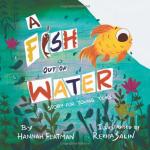
My story for young TCKs and MKs in transition, A Fish out of Water, is a good conversation starter for parents who want to guide their little ones through cross-cultural moves and culture shock.

Risk Factors and Risk Prevention for Homeschooled MKs

Please note: This article addresses various types of abuse and neglect and includes discussions around child sexual abuse.

As TCK Training’s Director of Research I have spent a great deal of the past year analysing data from our 2021 survey of 1,904 Adult TCKs. One of our findings was that homeschooled missionary kids tended to have more exposure to childhood trauma than did missionary kids who were primarily educated in other ways. This data can seem both shocking and surprising, so Elizabeth Trotter, a homeschool parent herself, requested that I unpack it further in today’s article.

Background

It is common for TCKs to experience more than one type of education during their childhood. In our survey we asked respondents to list ALL their educational experiences and also to select what they considered to be their primary educational experience.

294 of our 1,904 respondents (15%) selected “homeschool” as their primary educational experience. Most of these (216) were born after 1980. 22% of younger TCKs were homeschooled, compared to only 5% of TCKs born before 1980. 88% of the homeschooled TCKs who took our survey were missionary kids. 


The data I will be sharing today compares missionary kids born between 1980-2003 with other adult TCKs during the same time period. I will also be comparing missionary kids who were homeschooled to missionary kids with any other educational background. 

TCK Training just released a white paper entitled TCKs at Risk: Risk Factors and Risk Mitigation for Globally Mobile Families. In it we look at 12 risk factors and their prevalence among the TCKs we surveyed. I am about to discuss the numbers for homeschooled missionary kids for eight of these factors. These numbers may be painful for you to read; however, they are not the end of the story. Risk mitigation is a big part of the white paper, risk prevention is a big part of this article, and our belief in hope is a huge part of our heart at TCK Training. 

Risk Factors in Homeschooled TCKs

We start with physical abuse. This is one of only two risk factors in which the rates for homeschooled MKs were lower than that for other MKs, but the difference was minimal. 12% of homeschooled MKs reported experiencing physical abuse at the hands of an adult living in their home, compared to 14% of other MKs, and 16% of TCKs in general.

Next comes emotional abuse. 43% of TCKs overall reported experiencing emotional abuse from an adult living in their home, and for homeschooled MKs the rate was 47%. Among other MKs it was 35% – significantly lower, but still more than a third. And this is not historical MKs – we are talking about Millennial and Gen Z TCKs here. Nearly half of homeschooled MKs under the age of 40 reported experiencing emotional abuse in their home growing up. 

The question of physical neglect asked respondents how they felt as a child – asking about their sense of security over whether their physical needs for food, clothing, and medical care would be met (by their parents). 12% of TCKs overall and 13% of non-homeschooled MKs reported experiencing physical neglect as children. 19%, or nearly 1 in 5 homeschooled MKS, reported childhood physical neglect. Again, this is not saying 19% of homeschooled MKs are physically neglected, but rather that 1 in 5 did not have security that their needs would be met.

Similarly, emotional neglect addresses whether an individual’s needs for emotional security were met – whether they felt loved, important, special, and supported by their parent/s and family. 42% of TCKs overall reported emotional neglect during childhood, similar to homeschooled MKs at 41%. The rate among other MKs was only a little lower, at 37%. This is a significant percentage of MKs under the age of 40 who often felt unloved by or unimportant to their parents as children. 


The next three risk factors concern child sexual abuse (CSA). This is a topic many in the mission world prefer not to discuss, believing they can raise their children in a safe bubble where they will not be exposed to “sexual sin” and will therefore be safe from abuse and assault. The results of our survey show that many MKs raised in these bubbles were in fact not safe from CSA. 

24% of TCKs born after 1980 reported experiencing child sexual abuse as defined by the ACE questionnaire (perpetrated by an adult or a child at least five years older). That’s 1 in 4 TCKs. Even more homeschooled MKs – 28% – reported experiencing sexual abuse. The rate of sexual abuse in MKs who were not homeschooled was a little lower – 21%, or 1 in 5.  

Another form of CSA is child-to-child sexual abuse, which occurs before age 16, when the perpetrator is another child. The rate among TCKs generally and MKs who were not homeschooled was 26% – 1 in 4; among homeschooled MKs it was slightly higher, at 29%.

We also asked about grooming. This is when an adult prepares a child for future abuse – testing their boundaries and getting them accustomed to inappropriate words/touch. 1 in 3 homeschooled MKs (33%) reported experiencing grooming, compared to 24% (1 in 4) of other MKs, and 27% of TCKs generally.

Finally, a very important risk factor is that of household adult mental illness. To calculate this we asked respondents if any adult living in their home while they were a child had depression, mental illness, or attempted suicide. Usually this indicates a parent, but it could also be an extended family member, residential domestic worker, or other adult. Studies in the US put this rate at 19%; in our study, 39% of TCKs (all ages) reported household adult mental illness. This is more than double – but to be expected, given a previous study by the Truman group demonstrating that expatriate workers were at 2.5 times the risk of depression/anxiety than their domestic counterparts. 

Among TCKs born after 1980, the rate of household adult mental illness rose slightly to 43%. This is the other factor where homeschooled MKs had a slightly lower rate – 40% reported household adult mental illness. But 50%, fully HALF, of all other MKs reported household adult mental illness. 


Risk Prevention

While these numbers are disturbing, they are not the end of the story. It is not inevitable that missionary kids, and especially homeschooled missionary kids, will experience abuse and neglect during their childhood years. There are preventive care measures we can put in place to limit the likelihood that these traumas will occur, and there are protective factors to buffer them from negative long-term consequences of the difficulties they do face. Here are four simple ways to engage in risk prevention for missionary kids; more detailed information is available in our white paper.

1) Parental Mental Health

The prevalence of household adult mental illness is a significant risk factor for MKs, whether or not they are homeschooled. In our white paper we demonstrated that the presence of household adult mental illness dramatically impacted rates of all forms of abuse and neglect for TCKs. 

One of the best things parents can do to improve their TCKs’ childhood experience is to care for their own mental health. Put your own oxygen mask on first! You cannot give your children the emotional support they need when you are yourself suffocating. See a therapist, engage in a hobby that brings you life, get some time away, take a nap – or all of the above! Do whatever you need to do to bring balance to your life and replenish your emotional resources. 

2) Child Protection

Child protection policy is something that can easily be neglected in missionary circles. We want to trust everyone! Even if we are taught child protection principles, we may fear that by implementing them we will give the impression of mistrust or disrespect to team members, community leaders, or new/potential friends. But if 1 in 4 MKs are experiencing sexual abuse as children, we have a responsibility to protect them in every way we can. Child safety officers in missionary agencies share recommendations based on the latest information and best practices available to protect our children; heeding their calls for child protection is vital. 

3) Teaching Children

An important part of child safety is teaching children from early ages how to protect and advocate for themselves when we are not there to watch out for them – whether at school, with friends, or with people we have wrongfully believed are trustworthy. This does not mean you have to expose your children to things that are beyond their years. But you can teach them the difference between a secret and a surprise. You can teach them that they’re allowed to say “no” (and how to do so). You can teach them that they have a right to privacy, to feel safe and comfortable, to have control over their own body, and to have confidence in sticking up for themselves and their own safety. These things can make a huge difference in your children’s lives. In fact, children who have these skills are less attractive to predators. These skills provide a safety net for all kinds of abuse, as a child who is thus equipped is more likely to recognise the wrong-ness of physical or emotional abuse. 

4) Investing in Connection

Regularly tuning in with your children, listening to what matters to them, creating space for their emotions, and ensuring that they know you love them and will take care of them, can help prevent the experiences of physical and emotional neglect. This may mean sacrificing certain ministry commitments so that you can be present for events that are important to your children, along with making time for regular family routines. 

Now what?

While this is a long blog post, it only scratches the surface of the risk factors and risk mitigation we have been researching. If you would like to know more, I invite you to look into our free research resources at tcktraining.com/research.

What I really hope you take away from this is that while no one parents perfectly, little things can make a big difference. Demonstrating your love in words and actions matters. Caring for your own mental health so that you have the capacity to be more kind and patient with your family matters. Teaching your children how to confidently say ‘no’ matters. Teaching your children that they have the right to feel safe and comfortable matters. Risking embarrassment or cultural insensitivity to ensure a safe environment for your kids matters. Investing in time with your family matters. All these little things add up, and together they build a safe and secure environment for your child.


Photo by Jessica Lewis on Unsplash

When Your TCK is Bullied

Praying for Answers

There was a time which seemed to last forever, a time when my kids got bullied.

I wish I could say that, because of my spiritual and emotional maturity and love for our host country’s people, I had a good attitude about this. But I didn’t. Instead, when my kids were hit with pebbles and sticks and had their ice creams thrown in the dirt and were told to go back to America, I wished mean things upon other people’s children. Like acne. Or sinkholes.

Thankfully, we were still learning the language at the time.

My children confided in me. They looked to me for answers I only wished I had. How could I help them? I tried talking to parents, and to the kids themselves, but it didn’t help. Thus began more than a year of research and problem-solving, in which I feared I’d wear out both Google and God, and pretty much everyone else I knew, in my quest for a solution. Perhaps you are facing a similar situation. If so, I want to share six strategies that worked well for us.

1. Give it to God

It can be difficult to know whether a given case of bullying is something that will burn our kids or refine them; crush them or make them stronger. I’ve found that, like in many parenting challenges, I have to bring this kind of issue before God and lay it at His feet, praying for wisdom and guidance. It’s possible that removing your kids from a bullying situation will be the best option. Or God might direct you to stay and work through it. Trust Him, and trust your instincts as a parent.

2. Teach Confidence

According to nearly every article I read on the Internet, bullies want an easy target. Someone who won’t fight back, who will give a good reaction—whining, crying, cowering, tattling. Bullies love this because makes them feel powerful, when, perhaps, they feel powerless in other areas of life. This is sad and disturbing, yet it is true in our sinful world.

I decided to focus on teaching and modeling confidence. We worked on standing straight, chin up; looking around; having a relaxed, pleasant expression. We worked on reacting to unkindness in a calm, amused manner or cheerfully ignoring insults. A fellow TCK mom and good friend of mine also recommended encouraging my kids to focus on people who do like them, and spending time and energy on those people and activities that bring joy.

I was recently with a group of expat teens who were asked to share their biggest struggle in their host country. Several mentioned not knowing the local language. It takes time and effort, but solid language skills can give a huge boost to confidence. If you’re looking for help in this area, you can check out my earlier article, 3 Ways to Help Your TCK with Language Learning. 

3. Stay Curious

I know how frustrating it is when your child asks you to explain someone’s behavior, and your only answer is, “Um, yeah, I have no idea.” It hurts our parental pride not to have tidy, sitcom-succinct answers. But press into that discomfort. You may find an opportunity to better understand your host culture.

Find a friend—a local mom, a thoughtful teenager, a language helper—someone you can talk to. Questions might include: Is this normal behavior? Is it seen as a problem here? What do people in your culture normally do about this issue? Why do you think it is happening? 

Involve your child in this cultural research. Approach it like a puzzle. By staying curious, you model how to approach the other cultural mysteries your child will face in his or her life. We learned that in our host country, hitting is seen as a problem-solving option for both children and adults. It’s a part of life. This helped us to see and understand the difference between frustrated, childish whacking and targeted hitting that is meant to intimidate.

4. Make Great Memories

Being bullied takes large withdrawals out of several banks, including the Bank of Self-Esteem and the Bank of Love for the Host Culture. You, as a parent, can help balance this by making deposits.

For the Bank of Self-Esteem, we arranged special times both as a family and for one-on-one dates with Mom or Dad. This gave us a chance to learn more about what each child loves and to give them opportunities to develop their talents and dive into their interests. Consider helping your kids find ways to serve your family such as cooking a meal or fixing bike tires. This will naturally increase self-esteem and put bullying in perspective.

For the Bank of Love for the Host Culture, we sought out other people and families and purposely spent time with those we all got along with. To help your child find new people to hang out with, you could help them join an art or sports club, or learn skills that are unique to your country. One TCK I know learned to play bagpipe when she lived in Scotland; another taught English classes in her Cambodian community; a third learned to tie a sari in India. Look beyond just peers — younger kids and elderly people are also great places to find positive relationships.

5. Be Creative

As I observed the neighbor kids interacting one afternoon, I had an epiphany. These kids were bored! And the more bored they felt, the more they pecked at each other. They needed something to do.

Now, gross motor stills are not my gift from Jesus. I spent most of my elementary PE classes feeling really, really confused. But I swallowed my pride, gathered some of the rocks the neighbor kids had been throwing at each other, and started a relay race. Surprisingly, the bullying nearly disappeared for several weeks. (And I had a childhood dream fulfilled when the kids rang our doorbell and asked me to play!)

Rock relay races may not be applicable in your circumstances, but the problem-solving principle might be. Maybe someone has a habit of putting others down to boost their self-image. Would a one-on-one playdate without group pressure help them feel less threatened? Maybe everyone else knows how to play soccer and your kids love basketball. Could they ask one of the friendlier kids to coach them? Pinpointing the reason for the bullying is the first step in equipping your child and/or other kids to redirect behavior and energy in more positive ways.

6. Practice Forgiveness

Six months after I started this journey with my kids, I got an email from a “mother in Israel,” an elderly woman who prays for us and our mission. She’d read a kids’ article I’d written about the bullying and advised my children to forgive their enemies. I read the letter, then looked around self-consciously. Did she know about the acne and sinkholes? And, more importantly, how did I forget about forgiveness?

I had taught my kids to be diplomatic, to act confident, to walk away, to be helpful to the neighbors, to love themselves as children of God despite their flaws, to know the bullying wasn’t their fault, to be willing to grow. . . . But I’d never mentioned forgiveness.

We began to pray for our enemies. It was hard. Hard for them and for their mama bear. I began a months-long dive into Jesus’ sermon on the mount, the sermon where this famous advice is given. Suddenly, it seemed, the entire sermon was about bullies and bullying and what we’re supposed to do about it all. 

I learned that Jesus wants us to see all people as just that: people. It’s easy to objectify someone who hurts us. Praying for our enemies, forgiving them, and even trying to love them leads us to see them as people. 

And maybe that’s why it’s so hard to forgive. Because by forgiving, we realize that our bullies are just as in need of grace and help as we are.

Why We Stayed

I’ll be honest. At the beginning of our bullying journey, I was ready to pack up my cubs and move. After all, our landlord even confessed to our helper that his family moved out because of rude neighbors!

I submitted these plans to God… strictly as a formality. I mean, I assumed God had read all the same articles on bullying and depression and anxiety that I had. He would surely give us the green light and send us to a more emotionally functional neighborhood. But, long story short, God said no. I very clearly sensed Him telling me to wait. I second-guessed myself daily, and talked to God often, ready to rescue my kids from this trial at a moment’s notice.

But as I waited, something unexpected happened. I saw my children grow and mature. I saw them start living their faith. They began to lean on it and to depend on it. I watched them come to Jesus because they didn’t want to forgive, and I saw Jesus help them do the impossible. That is hard heart work. And in the end, this growing relationship with God was more valuable than the comfort of always being loved by everyone.

If you’d like to hear more about our journey, I’ve written about it on my newsletter, Whatsoever Things. I’d love to see you there.

Searching for Home After a Global Upbringing

Editor’s Note: The following piece is an excerpt from Lisa McKay’s memoir, Love at the Speed of Email. She first shared it on A Life Overseas many years ago, back in March of 2013. But many of our readers weren’t around then, and I love this story so much that I asked her if we could bring it out of the archives and share it with everyone again. ~Elizabeth Trotter

Love At The Speed Of Email is a memoir – the story of how I met my husband while he was in Papua New Guinea working for a humanitarian organization and I was in Los Angeles working as a stress management trainer. It’s more than a love story, though. It’s a recounting of my struggle to find an answer to the question, “Where’s home?” after being raised in five different countries and then embracing a career that kept me perpetually on the move. I suspect that this struggle to define home is one that those of you who were raised as third culture kids (or who are raising global nomads yourselves) will be all too familiar with.

The section I’m sharing comes from a chapter called Airports and Bookstores. I was twenty-six years old, in Hawaii, and having the time of my life at the first creative writing workshop I’d ever attended when I realized for the first time that I might have a real problem when it came to this concept of home . . .

Borrowing inspiration from the tale of the prodigal son in the Bible, our instructors had told us to write a “coming home” story. We should, we were told, write the prodigal who was us as an adult, coming home to ourselves as a child.

“Pick the clearest recollection you have of home and use that,” they said.

Everyone else reached for a pen or a laptop. I just sat there.

I was still sitting there ten minutes later.

Eventually I went up to the front of the room, to the giant leather-bound book of synonyms that was sitting on a podium, looked up home and wrote down these words: Birthplace. Stability. Dwelling. Hearth. Hearthstone. Refuge. Shelter. Haven. Sanctum.

I went back to my seat and stared past the book of synonyms, past the palm trees standing still under a blanket of midday heat, and out into the hazy blue of an ocean that promised a horizon it never quite delivered.

The list didn’t seem to help much.

Birthplace conjured Vancouver, a city I’d visited only twice, briefly, since we’d left when I was one.

Stability then. Unlike my parents’, this was not a word that could be applied to my childhood. In stark contrast with their agrarian upbringing, I’d spent an awful lot of my time in airports.

Maybe that was it, I thought, wondering whether the sudden spark I felt at the word airport was a glimmer of inspiration or merely desperation.

There was no denying that as a child I’d thought there was a lot of fun to be had in and around airports. More than one home movie shows me and my sister, Michelle, arranging our stuffed animals and secondhand Barbies in symmetrical rows and lecturing them severely about seat belts and tray tables before offering to serve them drinks. When we were actually in airports, we spent many happy hours collecting luggage carts and returning them to the distribution stands in order to pocket the deposit. We were always very disappointed to find ourselves in those boring socialist airports with free trolleys.

In Hawaii, I was tempted to start writing my story about home but didn’t.

“Your clearest memories of home as a child cannot possibly be in an airport,” I scolded myself, still staring past my laptop and out to the white-laced toss and chop of cerulean. “Home is not a topic that deserves flippancy. Work harder. . . . What about dwellings and hearths?”

That year my parents were living in the Philippines. My brother was in Sydney. My sister was in Washington, D.C. The bed I could legitimately call mine resided in Indiana. I had lived none of these places except D.C. as a child, and they were such awkward, lonely years that the thought of going back, even in a story, made me squirm. We lived in Washington, D.C., for three and a half years before moving to Zimbabwe, and what I remember most clearly about that time is that I spent much of it reading.

I’ve been in love with reading since before I can remember. Our family photo albums are peppered with photos of me curled up with books – in huts in Bangladesh, on trains in Europe, in the backseat of our car in Zimbabwe.

I can’t remember my parents reading to us before bed, although they swear they often did – sweet tales about poky puppies and confused baby birds looking for their mothers.

“You were insatiable,” Mum said when I asked her about this once. “No matter how many times I read you a book, you always wanted more.”

“Awwww,” I said, envisioning long rainy afternoons curled up with my mother while she read to me. “You must have spent hours reading to me.”

“I did,” my mother said in a tone that let me know she fully expects me to return the favor one day. “But it was never enough. So I taped myself.”

“What?” I asked.

“I got a tape recorder,” she said. “I recorded myself reading a story – I even put these cute little chimes in there so you’d know when to turn the page. Then, sometimes, I sat you down with the tapes.”

“Nice,” I said in a way that let her know that I didn’t think this practice would get her nominated for the motherly hall of fame.

“You loved it,” she said, completely uncowed. “Plus, I needed a break every now and then. You were exhausting. You never stopped asking questions. You asked thirty-seven questions once during a half-hour episode of Lassie. I counted.”

I can’t remember any of this. My earliest memories of reading are solitary, sweaty ones. They are of lying on the cool marble floor of our house in Bangladesh, book in hand, an overhead fan gently stirring the dense heat while I chipped away at frozen applesauce in a small plastic container. But it’s when we moved from Bangladesh to the States when I was nine that my memories of books, just like childhood itself, become clearer.

Of all the moves I’ve made in my life, this was one of the most traumatic. Abruptly encountering the world of the very wealthy after two years of living cheek by jowl with the world of the very poor, I discovered that I didn’t fit readily into either world. My fourth grade classmates in Washington, D.C., had no framework for understanding where I had been for the last two years – what it was like to ride to church in a rickshaw pulled by a skinny man on a bicycle, to make a game out of pulling three-inch-long cockroaches out of the sink drain while brushing your teeth at night, or to gaze from the windows of your school bus at other children picking through the corner garbage dumps.

I, in turn, lacked the inclination to rapidly absorb and adopt the rules of this new world, a world where your grasp on preteen fashion, pop culture, and boys all mattered terribly. Possibly I could have compensated for my almost total lack of knowledge in these key areas with lashings of gregarious charm, but at nine I lacked that, too. I was not what you would call a sunny child.

So I read instead. I read desperately.

I read pretty much anything I could get my hands on. One of the few good things I could see about living in the States was the ready availability of books. Some weekends Mum and Dad would take us to the local library’s used book sale. Books were a quarter each. I had a cardboard box and carte blanche. On those Saturday mornings I was in heaven.

Like many kids, I suspect, I was drawn to stories of outsiders or children persevering against all odds in the face of hardship. I devoured all of C.S. Lewis’ stories of Narnia and adored the novels of Frances Hodgson Burnett, especially the ones featuring little girls who were raised in India before being exiled to face great hardship in Britain. But I also strayed into more adult territory. I trolled our bookshelves and the bookshelves of family friends, and those bookshelves were gold mines for stories about everything from religious persecution to murder, rape, civil war, child brides, and honor killing.

In retrospect, even at eleven I wasn’t reading largely for pleasant diversion, for fun, for the literary equivalent of eating ice cream in the middle of the day. I was extreme-reading – pushing boundaries – looking to be shocked, scared, thrilled, and taught. I was reading to try to figure out how to make sense of pain.

It is entirely possible that had we remained in Australia throughout my childhood, I would still have spent the majority of these preteen years feeling isolated and misunderstood. After all, in the midst of our mobility I never doubted my parents’ love for me or for each other, but this did not forestall an essential loneliness that was very deeply felt. I suspect that I would still have grown into someone who feels compelled to explore the juxtaposition of shadow and light, someone who is drawn to discover what lies in the dark of life and of ourselves. But I also suspect that the shocking extremes presented by life in Bangladesh and America propelled me down this path earlier, and farther, than I may naturally have ventured.

It was largely books that were my early companions on this journey. They were stories of poverty and struggle, injustice and abuse, violence and debauchery, yes. But they were also threaded through with honor and courage, sacrifice and discipline, character and hope.

Many people seem to view “real life” as the gold standard by which to interpret stories, but I don’t think that does novels justice. For me, at least, the relationship between the real and fictional worlds was reciprocal. These books named emotions, pointed to virtue and vice, and led me into a deeper understanding of things I had already witnessed and experienced myself. They also let me try on, like a child playing dress-up, experiences and notions new to me. They acted as maps, mirrors, and magnifying glasses.

In those lonely childhood years, books also provided refuge. They were havens and sanctums.

Did that make them home?

When the writing exercise ended after half an hour and we were invited to share, I’d come up with only two ideas.

Set the scene in a bookstore. Or set it in an airport.

I hadn’t written a single word.


When the Third Culture Kids Are Not Alright

by Elizabeth Vahey Smith

Editor’s Note: Christianity Today recently published an article by Rebecca Hopkins (who has written for A Life Overseas in the past) titled “The Missionary Kids Are Not Alright.” This guest piece by Elizabeth Smith was submitted prior to the publication of the Christianity Today article, but it beautifully addresses the concerns raised in the article. ~Elizabeth Trotter

I don’t know how many times my father told me that he had been around the block a time or two. All the troubles I faced in my childhood, he had faced too. He had experience to guide me through the complexities of life. What a gift to possess that level of expertise! I can’t relate.

That’s because years later, I looked into the eyes of my own baby as a helicopter took off behind me, leaving us in a village in the middle of the jungle. There were no blocks here. I had not been around them. I had no experience for my own cross-cultural challenges, let alone my son’s third culture challenges. While I navigated American sleep-training in Papua New Guinean baby bilums (portable baby hammocks), I could only wonder what it would be like growing up in a world of blended cultures. 

What was it like ducking under a mosquito net to pull up Paw Patrol on the tablet?  What was it like deciding between cereal or roasted taro root for breakfast? What was it like transitioning from running naked and free in the village to having to wear clothes all the time in America? (That one I knew would be hard!)

In those years, there weren’t a lot of resources for little Third Culture Kids. Most resources came in the form of terrifying statistics of suicide rates among TCKs or support groups for struggling adult TCKs. When it came to preventively nurturing TCKs, there was a void. Until Raising up a Generation of Healthy Third Culture Kids was published.  When the author, Lauren Wells, founded TCK Training, she outlined the unique needs of TCKs and how to support them in practical ways. 

Finally I saw how TCKs are influenced by more than one culture but belong to none of them, and I saw how that impacted their identity. I saw how TCKs were praised for smiling through the confusion and uncertainty of transitions, and I saw how that stunted their emotional intelligence. I saw how TCKs normalized loss, transitions, deep poverty, social injustice, crime and more, and I saw how that added to an unstable Grief Tower threatening to collapse. I saw how TCKs expect to go back to their passport countries as adults, and I saw how subconscious expectations set them up for lives fraught with disappointment. 

Most importantly, I learned that when supportive adults provide preventive care, these challenges can be mitigated. When TCKs receive support and preventive care like this, they experience the unique gifts they’re entitled to: high emotional intelligence, healthy empathy, responsible adaptability, a beautiful mosaic identity, and rich contentment in life. I clearly shared a passion with TCK Training, and in time I joined their team, helping to train TCK parents and caregivers in preventive care.  

The question most of us have is: How do we as supportive adults provide preventive care for the TCKs we love? That is the question TCK Training was created to answer! Here are some of the ways TCK Training can help you as you seek to help the TCKs in your lives. 


  1. Parent and Caregiver Education. We realized early on that the most efficient and practical way to care for TCKs is to empower the adults already in their lives. For that purpose, we have a huge archive of workshops, with more being added monthly. We have practical tips for all ages, from TCK toddlers and elementary-aged kids to teens and university-aged TCKs, but the foundational information on how to practically care for TCKs is found in our Raising Healthy TCKs workshop.
  2. Family Curriculum. To take the education we provide in workshops and bring that to your TCKs, we developed the Family Curriculum. These are fun lessons that you can do as a whole family that specifically target the key challenge areas for TCKs. 
  3. Debriefs. There is a very widely spread myth that children are resilient. What this looks like in practice is that they don’t receive the care that their parents receive from their sending agency. So TCK Training offers debriefs geared specifically for the kids or for the whole family. Again targeting the key challenge areas for TCKs, our debriefs focus on the TCKs while also supporting the parents with practical ideas on how to care preventively. 
  4. Family Care Packages. Our family care packages are a year of care in the form of monthly or bi-monthly check-ins. These packages are excellent for families who want someone in their lives who is prioritizing the emotional lives of their TCKs. 


As I’m writing this, we’re packing up from our time in Egypt and preparing to transition to Jordan. My son is a pre-griever, so we’re making space now to think through our losses.  We’re breathing deeply as we do brunch one last time on the Nile. We’re talking about how much we’ll miss our resident stray cat as we dip pita bread into baba ganoush. We’re thinking about how much time we’ve spent in Egypt and wondering how this will change us. We’re crying because it was beautiful, and we will miss it. 

I still haven’t been around the block. The village streets in Egypt are more like a labyrinth, anyway. But I’ve been around the globe, digging into research and collecting stories from TCKs worldwide. Through my work with TCK Training, I’ve learned that the number one thing TCKs need is for their parents to make space for their grief and loss and to sit with them and say, “It makes sense that you feel that way. I do, too. Let’s learn together how to walk around this block.” 

~~~~~~~~~~

Elizabeth Vahey Smith is a TCK mom who spent 5 years in Papua New Guinea as a missionary. Now her family explores the globe full-time as worldschoolers. Elizabeth works remotely as the COO for TCK Training, traveling often for work and always for pleasure. She is the author of The Practice of Processing: Exploring Your Emotions to Chart an Intentional Course. Follow her travels on Instagram @elizabeth.vaheysmith and @neverendingfieldtrip. Learn more about research-based preventive care for TCKs @tcktraining.